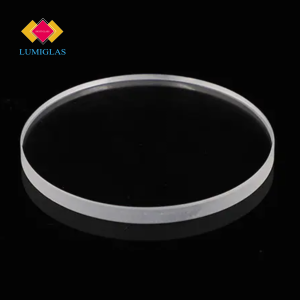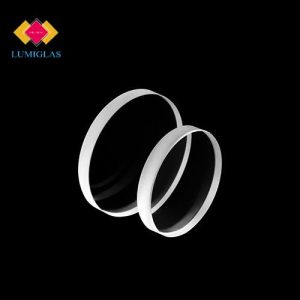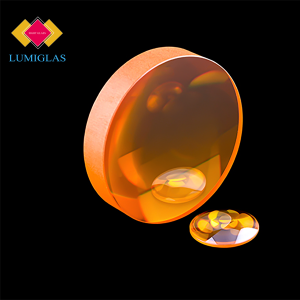


Infrared Crystals – Calcium Fluoride Glass
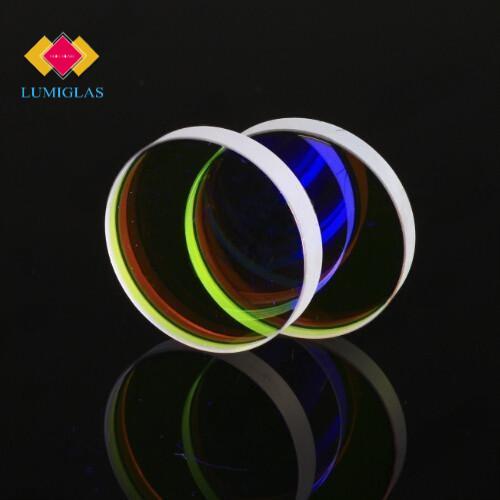
Infrared Crystals — Calcium Fluoride (CaF₂) Windows & Lenses
High-purity Calcium Fluoride (CaF₂) infrared crystals for precision windows, lenses and prisms — offering broad deep-UV to mid-IR transmission (~0.13–8 µm), low dispersion for reduced chromatic aberration, low fluorescence and excellent optical homogeneity for spectroscopy, imaging and laser applications.
Description
CaF2 crystals have excellent optical and thermomechanical properties. In the spectral range of 0.13um~9.0um, it can be used as window, lens and prism material. Due to its optical isotropy, low absorption and low refractive index, CaF2 crystals show unique advantages in the field of high-power laser and ultraviolet laser optics.
Key benefits
-
Wide spectral transmission — deep-UV through mid-IR performance for versatile multispectral designs.
-
Low dispersion & low refractive index — reduces chromatic aberration, simplifying multispectral lens design.
-
High optical homogeneity & low birefringence — excellent for imaging and spectroscopic applications.
-
Good laser performance — suitable for many UV and IR laser applications with appropriate coatings.
-
Robust & non-hygroscopic — easier to handle and mount than some fluoride crystals; compatible with standard polishing and coating processes.
- Custom processing available — DSP / SSP polishing, AR coatings, bevels, tight thickness tolerances and cleanroom packaging.
Why choose CaF₂ for IR & UV optics
Choose CaF₂ when you need a single optical material that spans from deep-UV into the mid-IR while keeping dispersion and bulk absorption low. Its stable optical properties, good polishability and wide acceptance in OEMs and research labs make it ideal for spectrometers, imaging objectives, laser windows and high-precision OEM instruments.
Typical technical specifications
| Density (g/cm3) | 4.89 |
|---|---|
| Transmittance range (μm) | 0.15~12.5 |
| Refractive index (2.58 μm) | 1.4626 |
| Reflection loss (2.58 μm) | 6.8% ( both faces ) |
| Radiation length (cm) | 2.06 |
| Emission Peak (nm) | 310(slow);220(fast ) |
| Attenuation Constant (ns) | 620(slow);0.6( fast ) |
| Light output relative to Nal [Nal(TI)=100%] | 20%(slow);4%( fast ) |
| K-hardness(kg/mm2) | 82 with 500g indenter |
| Solubility at 23°C (g/100gH20) | 0.17 |
| Cleavage planes | ( 111) |
| Melting point (°C) | 1280 |
| Transmittance | >90%( 0.35~9μm,3mm) |
Applications & industries
-
Deep-UV spectroscopy and photometry
-
UV lithography and semiconductor photonics
-
IR / multispectral imaging windows and objectives
-
Laser windows and beam delivery optics
-
Scientific instrumentation, research labs and high-precision OEM equipmentC
Downloads
Carium Fluoride Glass— Datasheet (PDF):CARIUM FLURIDE GLASS
FAQ
1.What applications is CaF₂ suited for?
Common uses include deep-UV spectroscopy, UV lithography, spectrometer windows, laser windows, multispectral/mid-IR imaging objectives, and other optics needing broad spectral coverage and low dispersion.
2.Is CaF₂ hygroscopic or sensitive to environment?
CaF₂ is non-hygroscopic, easier to handle than some fluoride crystals. However, avoid prolonged exposure to strong acids/alkalis and minimise mechanical/thermal shock. Proper mounting and sealing are recommended for harsh environments.
3.Can CaF₂ be AR-coated and super-polished?
Yes — we offer AR coatings tuned for UV/VIS/IR bands and surface finishes including DSP/SSP and superpolish to meet imaging and laser requirements.