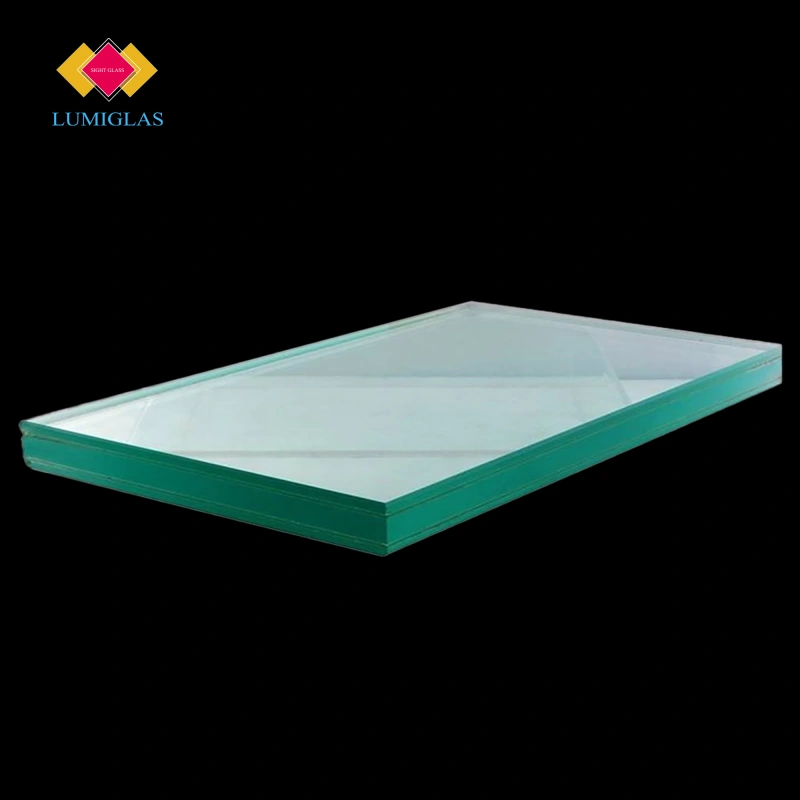
Bulletproof Glass — AK47 & M16 Rifle Resistant (GA165 / ≈ EN1063 BR5-6)
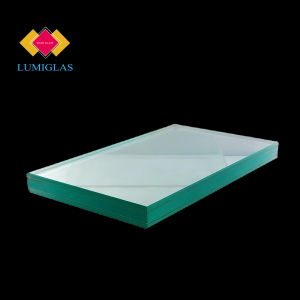
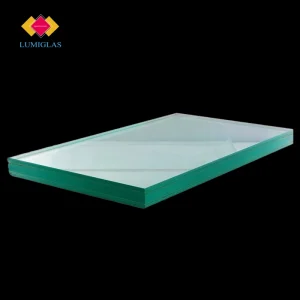
Lumiglas® bulletproof glass FDCL-4B-48: AK47 (Type 56) and M16 rifle resistant. GA165-2016 certified, 48 mm composite, 2513 J kinetic energy — exceeds EN1063 BR5.
Description
Bulletproof glass Level 4 is a high-performance ballistic composite glass engineered to defeat military assault rifle fire, including the AK47 (Type 56), M16 5.56 mm and Type 95 5.8 mm service rifles, at point-blank to mid range. Specifically, the 48 mm composite stack consists of three layers of 8 mm tempered glass, three layers of 5 mm polycarbonate (PC) and five TPU interlayers, laminated under controlled heat and pressure. Lumiglas certifies the assembly to GA165-2016 Level 4 — the Chinese national bulletproof glass standard issued by the Ministry of Public Security. Therefore, the glass stops a Type 56 7.62 mm rifle round traveling at 710–725 m/s with a kinetic energy of approximately 2513 J.
Because the GA165-2016 test protocol for Level 4 uses higher-velocity steel-core ammunition than the EN1063 BR5 reference round, FDCL-4B-48 glass exceeds the kinetic energy threshold of EN1063 BR5 (1505 J) by 67%. Moreover, the 11-layer construction delivers proven performance against the most common military rifle threats worldwide — the AK-pattern 7.62×39 round and the NATO 5.56×45 round. However, EN1063 uses different cartridge types and verification protocols. As a result, where formal EN1063, UL752 or NIJ certification is required, Lumiglas arranges supplementary testing on customer request using the corresponding standard ammunition.
Level 4 bulletproof glass — quick facts
- Model: FDCL-4B-48-LMX-I
- GA165-2016 level: Level 4 (Chinese national standard)
- Threats defeated: Type 56 (AK47) 7.62 mm rifle at 710–725 m/s (~2116 J); M16 5.56 mm at 948–1000 m/s (~1765 J); Type 95 5.8 mm at 930–960 m/s
- Peak kinetic energy rating: ~2513 J
- Equivalent EN1063 level (by kinetic energy): BR5 to BR6 (exceeds BR5 threshold by 67%)
- Nominal thickness: ~48.35 mm
- Weight: 96 kg/m²
- Visible light transmittance: > 70%
- Configuration: (8 mm glass × 3) + (5 mm PC × 3) + (TPU interlayers × 5)
- Standards: GA165-2016 · ISO 9001:2015 · GJB 9001C:2017 · EJ/T 9001:2014
Composite layer construction
Lumiglas Level 4 bulletproof composite glass uses an 11-layer stack with three glass + three polycarbonate working layers, bonded by five TPU interlayers. Specifically, the strike face is glass, which shatters and dissipates the bullet’s initial energy. The TPU interlayer absorbs fragments. The PC layer deforms plastically and arrests the bullet. Moreover, the cycle repeats three times — providing three independent ballistic-stop opportunities against high-velocity rifle rounds. The final layer facing the protected side is polycarbonate, which prevents back-face spall (glass fragments flying toward the protected person).
| Layer # | Material | Function |
|---|---|---|
| 1 — Strike face | 8 mm tempered glass | Initial bullet shatter |
| 2 | 1.27 mm TPU interlayer | Fragment containment |
| 3 | 5 mm polycarbonate (PC) | First ballistic deformation layer |
| 4 | 1.27 mm TPU interlayer | Interlaminar bonding |
| 5 | 8 mm tempered glass | Secondary energy dissipation |
| 6 | 1.27 mm TPU interlayer | Fragment management |
| 7 | 5 mm polycarbonate (PC) | Second ballistic deformation layer |
| 8 | 1.27 mm TPU interlayer | Interlaminar bonding |
| 9 | 8 mm tempered glass | Tertiary energy dissipation |
| 10 | 1.27 mm TPU interlayer | Spall absorption |
| 11 — Protected face | 5 mm polycarbonate (PC) | Final ballistic stop, spall prevention |
⚠ Installation orientation: The glass face MUST face the threat side (outside / strike face). The polycarbonate face must face the protected side. Reversed installation will fail at the first hit.
Cross-standard performance comparison
Different countries use different ballistic standards. The table below maps the Lumiglas FDCL-4B-48 performance to the major international standards. Levels are calculated by comparing kinetic energy at impact, since this is the dominant physical variable determining glass penetration resistance.
| Standard | Equivalent level | Test cartridge | Kinetic energy |
|---|---|---|---|
| GA165-2016 (China) — certified | Level 4 | Type 56 (AK47) 7.62 mm steel-core, 7.75–8.05 g at 710–725 m/s; M16 5.56 mm at 948–1000 m/s | 2513 J |
| EN1063 (Europe) — equivalent | BR5 to BR6 (exceeds BR5 by 67%) | 5.56×45 SS109 / .223 Remington | 1505 J |
| UL752 (USA) — equivalent | UL752 Level 5 to 6 | 7.62 NATO / 5.56 NATO | ~3500 J |
| NIJ 0108.01 — equivalent | NIJ III | 7.62×51 NATO M80 ball | ~3500 J |
Equivalent levels are calculated by kinetic energy mapping. Formal EN1063, UL752 and NIJ certification testing using the corresponding standard ammunition is available on customer request — please specify the required standard when ordering.
Independent test report
FDCL-4B-48 has been independently tested and certified to GA165-2016 Level 4. The complete test report — issued under the Chinese national bulletproof glass standard — documents the cartridge type, velocity at impact, witness panel results and pass/fail determination per ballistic event. Therefore, customers can verify the certification with full forensic detail.
📄 Test report (Chinese, original): Download GA165-2016 Level 4 test certificate (PDF)
English summary translation available on request. Original Chinese certificate carries the issuing authority’s seal and is the legal record.
Technical specifications
| Parameter | Value |
|---|---|
| Model designation | FDCL-4B-48-LMX-I |
| Executive standard | GA165-2016 Level 4 |
| Primary threat defeated | Type 56 (AK47) 7.62 mm rifle, 7.75–8.05 g at 710–725 m/s (~2116 J) |
| Additional threats defeated | M16 5.56 mm at 948–1000 m/s (~1765 J); Type 95 5.8 mm at 930–960 m/s |
| Test cartridge mass | 7.75–11.79 g (depending on cartridge) |
| Test impact velocity | 710–1000 m/s |
| Peak kinetic energy at impact | 2513 J |
| Nominal thickness | 48.35 mm |
| Areal density (weight) | 96 kg/m² |
| Visible light transmittance | > 70% |
| Configuration | (8 mm glass × 3) + (5 mm PC × 3) + (TPU interlayers × 5) |
| Strike face material | Tempered float glass |
| Protected face material | Polycarbonate (PC) |
| Interlayer material | Thermoplastic polyurethane (TPU), 1.27 mm per layer |
| Standard sizes | Up to 2400 × 1600 mm — custom sizes available |
Typical applications
Level 4 bulletproof glass is the global standard for facilities and vehicles facing assault rifle threat. Specifically, the most common installations include:
- Armored Personnel Carriers
- Military Vehicles
- Special Forces Vehicles
- High-Security Embassies
- Border Watchtowers
- VIP Limousines
- Government Convoys
- Armored personnel carriers (APCs) and military vehicles — Level 4 is the standard specification for military APCs where the operational threat is AK47-pattern assault rifle fire. Therefore, defense ministries and military vehicle integrators worldwide specify Level 4 as the baseline for tactical vehicle glazing.
- Police special-unit vehicles — SWAT, anti-terror and border patrol vehicles operating in regions with credible assault-rifle threat. Moreover, the multi-hit performance suits sustained engagement scenarios.
- High-threat embassy and consulate glazing — Embassies in conflict zones or regions with active anti-Western terrorist activity specify Level 4 for both perimeter glazing and safe-room windows.
- VIP and head-of-state limousines — Up-armored sedans for politicians, executives and high-net-worth individuals in high-threat regions. Level 4 is the de facto industry standard for civilian armored vehicle manufacturers.
- Border watchtower and forward operating base glazing — Static defensive positions where sustained rifle fire is a credible threat. The 96 kg/m² weight is acceptable for fixed installations with engineered support structures.
- Government convoy escort and command vehicle glazing — Senior official transport and police command vehicles operating in high-threat regions or during major public events.
Engineering and specification notes
Why kinetic energy matters more than caliber
Two cartridges of the same caliber can have very different penetration capability — what matters is kinetic energy at impact, calculated as E = ½ × m × v². For example, a 7.62 mm pistol round and a 7.62 mm rifle round share the same diameter but the rifle round delivers approximately 4 times the kinetic energy because the velocity is much higher. Therefore, specification by caliber alone is insufficient. Lumiglas product levels are matched to specific cartridge + velocity combinations as defined by GA165-2016.
Multi-hit performance for sustained engagement
Assault rifle engagement typically involves multiple rounds delivered rapidly to a small target area. The Level 4 composite is designed for sustained multi-hit performance — the three-layer glass + three-layer PC construction distributes impact load across the laminate, so subsequent rounds arriving within milliseconds of the first do not penetrate even when hits cluster within a 150 mm radius. Moreover, after 3–5 hits in a tight group, the panel retains structural integrity even if the immediate impact zone shows visible damage. However, sustained automatic fire concentrated at a single point will eventually defeat any ballistic glass — for facilities expecting prolonged engagement, consider Level 5 upgrade or supplementary armor plating.
Frame and mounting considerations
Bulletproof glass performance depends on proper frame mounting as much as on the glass itself. For Level 4, the frame must hold the glass on all four edges with adequate bite depth (typically 35–40 mm minimum). Moreover, the frame material must transfer impact load to the surrounding structure without flexing — for vehicle applications, this typically requires steel frame integration with the body shell, not aluminum or composite frames. Lumiglas provides frame specification recommendations on request — submit your installation drawing for project-specific engineering review.
Weight and structural load
At 96 kg/m², a 1 m² panel of FDCL-4B-48 weighs approximately 96 kg. Therefore, vehicle window retrofits require chassis assessment — particularly for B-pillar, roof load paths and suspension capacity — before specification. A typical SUV with all windows upgraded to Level 4 gains approximately 250–350 kg in glass weight alone. For static installations, anchor bolt count and surrounding wall capacity must be reviewed. Lumiglas can provide weight tables for standard panel sizes on request.
About Lumiglas — bulletproof glass manufacturer
Lumistar Special Glass Technology Co., Ltd. (Lumiglas® brand) manufactures the complete GA165-2016 bulletproof composite glass range from Level 1 through Level 6, plus blast-resistant glass to GA667-2020. Our portfolio also covers industrial sight glass, glass-ceramic IGUs, sapphire and quartz viewports. Furthermore, we hold ISO 9001:2015 (Bureau Veritas), GJB 9001C:2017 (Chinese military quality system) and EJ/T 9001:2014 (Chinese nuclear quality system) certifications — therefore meeting the documentation requirements of defence, police, government and high-security private clients worldwide. See our certifications page for current third-party records.
Frequently asked questions
Standard and certification
What is GA165-2016 Level 4?
GA165-2016 is the Chinese national bulletproof glass standard, issued by the Ministry of Public Security. Level 4 specifies resistance to Type 56 (AK47) 7.62 mm rifle with steel-core bullet at 710–725 m/s (~2116 J), and additionally covers M16 5.56 mm at 948–1000 m/s (~1765 J) and Type 95 5.8 mm rifle at 930–960 m/s. To pass certification, the glass must stop the bullet with no penetration and no back-face spall fragments.
How does GA165 Level 4 compare to EN1063 BR5 and BR6?
The peak kinetic energy at impact for GA165 Level 4 is approximately 2513 J, which is 67% higher than the EN1063 BR5 reference of 1505 J and approaches the BR6 threshold. Therefore, FDCL-4B-48 glass exceeds the EN1063 BR5 kinetic energy threshold and approaches BR6. However, EN1063 certification requires testing with EN-specified cartridges (BR5 uses 5.56×45 SS109, BR6 uses 7.62×51 NATO ball). Formal EN1063 certification testing is available on customer request.
Does Level 4 stop both AK47 and M16 rounds?
Yes. GA165 Level 4 certification covers both Type 56 (the Chinese AK47 variant, firing 7.62×39 rounds) and M16 (firing 5.56×45 rounds). Therefore, FDCL-4B-48 is verified against both the major military rifle calibers worldwide. For specific NATO 7.62×51 (heavier rifle round) protection, consider Level 5 upgrade.
Can you provide EN1063, UL752 or NIJ certification?
Yes. Lumiglas arranges supplementary ballistic testing under EN1063 (Europe), UL752 (USA) or NIJ 0108.01 (USA) standards using the corresponding standard ammunition. The supplementary testing typically takes 4–6 weeks from order and is charged at cost. Submit your project specification and preferred standard when enquiring.
Construction and performance
Will Level 4 glass stop multiple rifle rounds?
Yes. The Level 4 composite is engineered for sustained multi-hit performance against assault rifle fire. The three-layer glass + three-layer PC construction distributes impact load across the laminate, so subsequent rounds arriving within milliseconds of the first do not penetrate even when hits cluster within a 150 mm radius. After 3–5 hits in a tight group, the panel retains structural integrity. However, sustained automatic fire concentrated at a single point will eventually defeat any ballistic glass — for prolonged engagement scenarios, consider Level 5 upgrade.
Why is the bulletproof glass composite, not solid glass?
Solid glass cannot stop high-energy projectiles — it simply shatters and the bullet continues through. Composite bulletproof glass uses alternating layers of tempered glass (which shatters and dissipates initial bullet energy), TPU interlayer (which absorbs glass fragments and slows the bullet) and polycarbonate (which deforms plastically and captures the bullet). Each material contributes a different physical mechanism. Moreover, the polycarbonate face on the protected side prevents back-face spall.
Which side faces the threat?
The glass face (marked at the factory) must face the threat side — outside, exterior or strike face. The polycarbonate face must face the protected side — interior, vehicle cabin, secure room or operator position. Reversed installation will fail at the first impact because the polycarbonate cannot shatter the bullet on initial contact. Confirm orientation with the strike-face label before final mounting.
Sizing, weight and ordering
How heavy is Level 4 glass for vehicle applications?
At 96 kg/m², a typical SUV with all windows upgraded to Level 4 gains approximately 250–350 kg in glass weight. Therefore, suspension upgrades, brake system review and chassis reinforcement are typically required for civilian vehicle armoring at Level 4. Lumiglas works with armored vehicle integrators worldwide and can provide weight schedules per panel for project planning.
What sizes can Lumiglas produce?
Standard panel sizes run up to 2400 × 1600 mm. Smaller panels for vehicle windows, control room glazing or vault doors are produced from the same composite stack. Custom shapes — including curved windshields, cut-corner profiles and small viewing apertures — are available on request. Provide a dimensioned drawing with the required frame mounting detail for a project-specific quote.
What is the lead time?
Standard Level 4 panels in stock dimensions ship in 3–4 weeks. Custom sizes, curved panels or vehicle-specific shapes typically require 5–7 weeks. For projects requiring supplementary EN1063 / UL752 / NIJ testing, add 4–6 weeks for the testing protocol. Contact us with your project schedule for confirmed delivery dates.
What information do I need to provide for a quote?
Provide: (1) the required protection level — GA165, EN1063, UL752 or NIJ; (2) panel dimensions or full window drawing; (3) installation type — fixed window, vehicle (specify make/model), door, viewing aperture; (4) frame material and mounting detail if known; (5) quantity required; (6) destination country for export documentation. For vehicle armoring, the vehicle make, model and year is essential. Photos of the installation location help our engineers verify mounting feasibility.
Sources and references
- GA165-2016 — Chinese national bulletproof glass standard, issued by the Ministry of Public Security of China.
- EN1063:1999 — European standard for security glazing — testing and classification of resistance against bullet attack.
- UL 752 — Standard for Bullet-Resisting Equipment, Underwriters Laboratories.
- NIJ Standard 0108.01 — Ballistic Resistant Protective Materials, US National Institute of Justice.
- Lumiglas FDCL-4B-48 test certificate (Chinese, original): Download PDF
- Lumiglas bulletproof composite glass catalogue: Download technical brochure (PDF)
Compare other bulletproof glass levels
- Level 1B — Lead-core handgun resistant (GA165 / ≈ BR1)
- Level 2B — Steel-core handgun resistant (GA165 / ≈ BR2-3)
- Level 3B — Submachine gun resistant (GA165 / ≈ BR3-4)
- Level 5B — 7.62 sniper resistant (GA165 / ≈ BR6)
- Level 6B — Armor-piercing sniper resistant (GA165 / ≈ BR7)
- Bulletproof glass guide — Understanding ballistic standards, levels and selection
Downloads & quotation
Download the complete bulletproof composite glass brochure, or send your project specification, dimensions and required protection standard for a direct quotation.