Why vacuum viewport prices vary — and how to choose the right vacuum window
(Practical guide for engineers, procurement and lab managers )
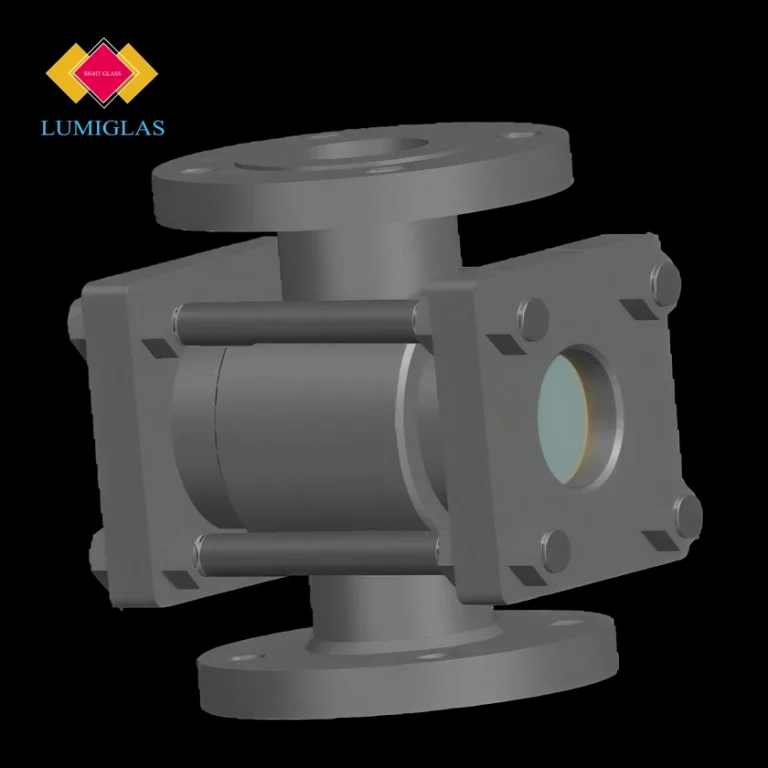
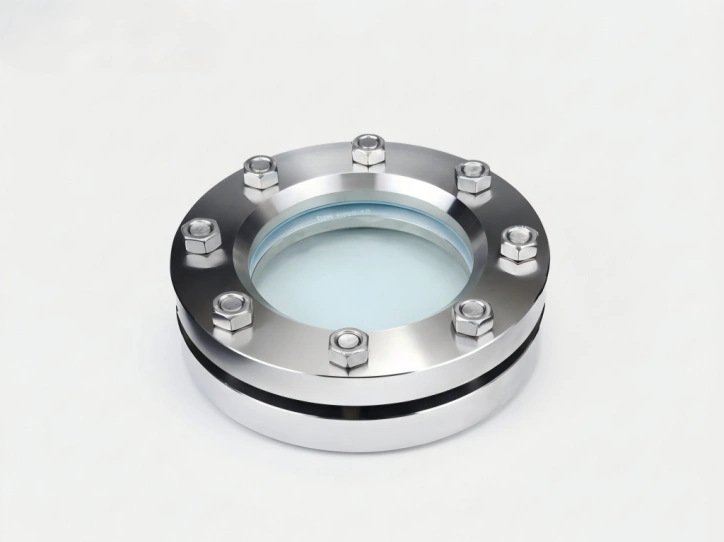
A vacuum viewport (also called a vacuum window or vacuum observation window) looks like “just a piece of glass in a flange,” but its price and performance are driven by many invisible engineering choices. Two visually similar viewports can cost very different amounts because one is a simple O-ring sealed sight port for rough vacuum, while the other is a brazed, sapphire window qualified for UHV, bake-out and corrosive processes.
This article explains the technical reasons behind price variance, gives a material-by-material comparison, and offers a step-by-step selection workflow so you order the right viewport — not the cheapest or the most expensive, but the one that fits your system.

Quick summary — the main price drivers
-
Sealing method & flange type — O-ring vs. CF (metal gasket) vs. brazed/fused.
-
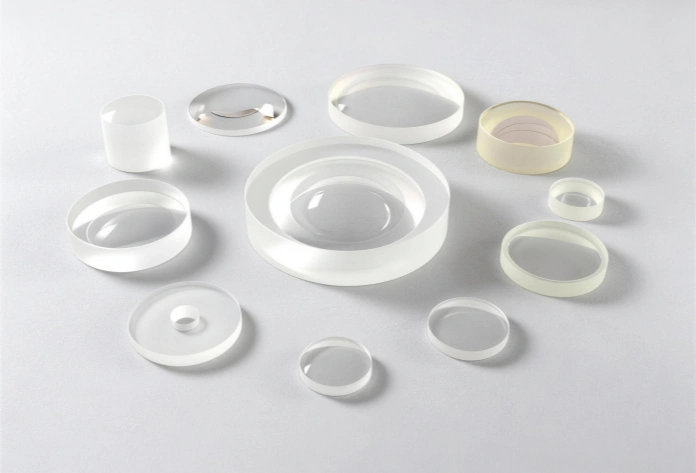
Glass/optical material — soda-lime, borosilicate, fused silica (JGS1), sapphire, aluminosilicate, laminated assemblies.
-
Vacuum rating & validation — HV / UHV requirements, helium leak tests, bake-out capability.
-
Manufacturing & QA — machining tolerances, welding/brazing skill, dimensional inspection, material traceability.
-
Surface finish & optical specs — transmitted wavefront, AR coatings, flatness and internal stress.
-
Quantity, customization & lead time — stock vs. custom parts, expedited processing.
Sealing methods — why they matter (and cost)
O-ring sealed viewports (elastomer seals)
-
How it works: Glass or a glass assembly is clamped against a seat with an elastomer (e.g., Viton, EPDM) O-ring.
-
Advantages: Low cost, easy replacement, good for lower vacuum (rough / low-to-medium vacuum).
-
Limitations: Elastomers outgas, have limited bake-out temperature, and age — not suitable for UHV or high-temperature bake.
-
Typical use: Process observation, laboratory rigs, food industry sight ports.
Metal gasket / ConFlat (CF) flanges
-
How it works: A soft metal gasket (e.g., copper) is crushed between knife edges. Provides hard metal-to-metal seal.
-
Advantages: UHV compatible, bakeable to high temperatures, very low leak rates.
-
Limitations: More expensive tooling, one-time use gaskets (gasket replacement required after disassembly).
-
Typical use: UHV systems, accelerators, semiconductor vacuum chambers.
Brazed (glass-to-metal) and fused (sealed) viewports
-
How it works: Glass is metallurgically joined (active brazing) or fused to a metal or ceramic sleeve; joint is vacuum-tight and long-lived.
-
Advantages: Excellent vacuum stability, low outgassing, long life, can be baked.
-
Limitations: High manufacturing skill, expensive; difficult/expensive to repair.
-
Typical use: Long-term installations requiring reliability and cleanliness (UHV, research facilities).
Selection tip: If your system requires bake-out >150–200 °C or leak rates <10⁻⁹ mbar·L/s, avoid elastomer sealed viewports.
Glass and optical materials — cost vs. capability
Material choice is often the single biggest cost driver after sealing method.
Borosilicate Glass(Borosilicate 3.3)
-
Pros: Good thermal shock resistance, inexpensive, widely available in many sizes.
-
Cons: Lower UV transmission than fused silica; attacked by some hot alkalis and HF.
-
Typical price position: Low–medium.
-
Use cases: General process observation, mid-temperature vacuum.
Fused silica / fused quartz (JGS1)
-
Pros: Extremely low thermal expansion, excellent UV transmission, low coefficient of thermal expansion (great for thermal cycling), low impurities and low outgassing.
-
Cons: Higher price than borosilicate; more brittle to mechanical shock.
-
Typical price position: Medium–high.
-
Use cases: Laser ports, semiconductor tools, high-temperature cycling, optical measurements.
Sapphire Glass (single crystal Al₂O₃)
-
Pros: Exceptional hardness, chemical resistance, high strength at temperature, excellent transparency across wide spectral band.
-
Cons: Very expensive, difficult to machine to flatness over large diameters.
-
Typical price position: High (premium).
-
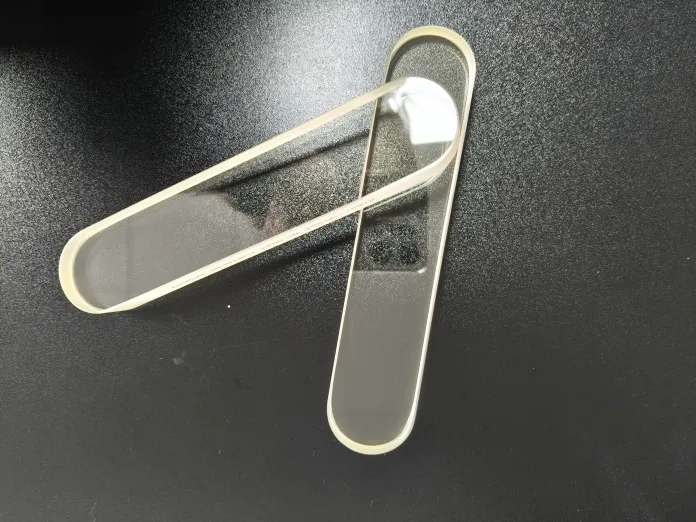
Use cases: Abrasive or corrosive environments, where strength and scratch resistance matter.
Aluminosilicate and specialty glasses
-
Overview: Higher mechanical strength than standard borosilicate, sometimes used in safety or pressure applications. Price and properties vary by exact composition.
Coatings and optical tolerance
-
Anti-reflection coatings, high flatness (λ/10, λ/4), and low stress (annealed/lapped) finish increase cost but improve imaging and minimize stray reflections — necessary when viewport will be used with cameras or lasers.
Vacuum ratings, testing and certification — hidden cost contributors
-
Bake-out capability: Viewports meant for bake-out at 200–450 °C require compatible seals and glass-to-metal joints; certification and furnace testing add cost.
-
Leak testing: Helium mass spectrometer testing and quantified leak rates (e.g., <10⁻⁹ mbar·L/s) require equipment and time.
-
Outgassing control: Low outgassing materials and careful cleaning reduce contamination risk — achieved via QA and clean manufacturing processes.
-
Traceability & certificates: Material certificates, dimensional inspection reports and test records raise supplier cost but are essential for regulated or critical projects.
Structural & manufacturing differences that affect price
-
Machining of stainless flanges to tight tolerances, vacuum-grade welds, ceramic insulators, matched CTE (coefficient of thermal expansion) assemblies and stress-relief processes all increase price.
-
Small vendors may sell visual lookalikes without proper assembly controls; established vendors run batch inspections, NDT and vacuum tests — reflected in higher price but lower field risk.
How to choose the right vacuum viewport — a practical workflow
-
Define performance requirements
-
Vacuum level (e.g., 10⁻³, 10⁻⁶, 10⁻⁹ mbar)
-
Maximum temperature and bake-out need
-
Chemical exposure (HF, halogens, acids, plasma)
-
Optical needs (laser, imaging, visual only)
-
Mechanical loads or shock risk
-
-
Match sealing strategy to vacuum & bake needs
-
LV/HV (rough to 10⁻⁶ mbar): O-ring or elastomer seals may be OK
-
HV/UHV or high bake: CF / brazed / fused seals required
-
-
Select glass material by thermal & chemical profile
-
Moderate temp & chemistry: borosilicate
-
Thermal cycling, UV, laser: fused silica (JGS1)
-
Abrasive/corrosive/extreme: sapphire or specialty ceramics
-
-
Specify optical and mechanical tolerances
-
Flatness, AR coatings, surface quality (scratch/dig), edge finish
-
-
Require test & documentation
-
Helium leak test, bake-out report, material certificates and inspection photos
-
-
Consider lifecycle cost
-
Higher initial cost often reduces downtime, rework and contamination risk
-
| Fused silica(JGS1) | Sapphire Glass | Borosilicatse Glass | |
|---|---|---|---|
| Temperature resistance | 450℃ | 450℃ | ≤150℃ |
| Leakage rate | 1E*10-12 pa·m³/s | 1E*10-12 pa·m³/s | 1E*10-10 pa·m³/s |
| Vacuum degree | 1*10-12Torr | 1*10-12Torr | 1*10-10Torr |
| Optical performance | 185-240nm>85% 240-2800mm>92% |
185-240nm>85% 240-2800mm>92% |
|
| Coating | — | AR antireflective coating | — |
Procurement language & RFQ checklist
-
Part: Vacuum viewport — specify visible diameter / plate length / flange type (CF/KF/ISO/DIN).
-
Sealing: specify type (O-ring material & groove spec, or CF copper gasket).
-
Glass: material (borosilicate / fused silica (JGS1) / sapphire), thickness, optical flatness.
-
Bake-out: required maximum bake temperature (°C).
-
Leak rate: required maximum leak rate (e.g., ≤1×10⁻⁹ mbar·L/s).
-
Coatings: AR / specific transmittance if required.
-
QA: request helium leak test report, dimensional inspection, and material certificates.
-
Packaging: clean, vacuum-pack or nitrogen purge if needed.
-
Lead time & spare policy.
Why consider Lumiglas for your vacuum viewport supply & engineering support?
At the end of the day, the right vacuum viewport is an engineered solution — not a commodity. Lumiglas provides:
-
Material choices (borosilicate, fused silica, sapphire, aluminosilicate) and guidance on trade-offs.
-
Multiple sealing options — O-ring designs for low vacuum, CF & brazed viewports for HV/UHV.
-
QA & test services: helium leak testing, bake-out procedures and certification.
-
Custom designs, drawings, and pre-shipment inspection photos; spare policy and lifecycle advice.
If you’re unsure which viewport matches your system, email us your operating conditions (vacuum level, bake temperature, media, optical requirements) and photos of the seat or flange: lumistar@188.com. We’ll do a free preliminary review and recommend the correct viewport family and a spare strategy.