A technical guide to choosing the glass, body alloy, seal and coating of a sight glass or sight flow indicator for extreme process duty.
Offshore and petrochemical plants run some of the harshest process duty on earth: chloride-laden sea air, aggressive acids and caustics, wide temperature swings, and safety codes that leave no room for a leaking or shattered window. A sight glass or flanged sight flow indicator is a small component, yet a wrong material choice turns it into the weak point of the whole line. This article walks through the real failure modes engineers face in these industries, and how the right glass, body alloy, seal and coating combination solves each one.
The central principle is simple but often missed: a sight glass assembly has four independent material decisions — the glass, the body, the seal and the external coating — and each must match the service. Get one wrong, and the whole unit fails at that limit. Below, we break down the pain points of offshore and petrochemical duty, then map each to a specific engineering answer.
The real pain points in offshore & petrochemical service
Before choosing a material, it helps to name the specific ways a sight glass fails in these environments. In our experience across FPSO, refinery and offshore-drilling projects, four failure modes dominate.
Chloride attack on the metal body
To begin with, sea air, seawater cooling and produced water all carry chlorides. Standard 316 stainless steel — the default for most sight glasses — has a pitting resistance equivalent number (PREN) of only about 24. In warm chloride service it pits, and above roughly 50–60 °C it becomes vulnerable to chloride stress corrosion cracking (SCC), a mechanism that can fail a part suddenly at loads well below its rated strength. On an offshore topside, a 316 body that looked fine on day one can perforate within a few years.
Chemical attack on the glass itself
In particular, petrochemical streams are not gentle on glass. Hot caustic (sodium hydroxide), concentrated alkaline solutions, phosphoric acid and fluorine-bearing media all etch glass over time. The glass clouds, thins and eventually loses its pressure rating. Critically, not all glass resists this equally — and the wrong glass grade fails far faster than the metal around it.
Thermal shock and temperature extremes
Process upsets, emergency cool-downs and steam-out cycles subject the window to sudden temperature swings. A glass with high thermal expansion cracks under this stress. Meanwhile, the seal and glass each have their own temperature ceiling — exceed it and you get leaks or fracture, even when the flange rating still looks adequate.
External corrosion and coating breakdown
Even a perfectly selected wetted assembly fails from the outside in if the external surface is unprotected. Salt spray attacks the flange and bolting; once the coating breaks down, corrosion creeps under it and jacks the bolted joint apart. Offshore, the external coating system is as important as the pressure-retaining material.
Solution 1 — Selecting the glass by temperature and media
The glass is the heart of the assembly, so naturally it deserves the first decision. Two variables drive the choice: the operating temperature and the chemistry of the medium. Get both right, and the window outlasts the rest of the unit.
Borosilicate as the default for aggressive media
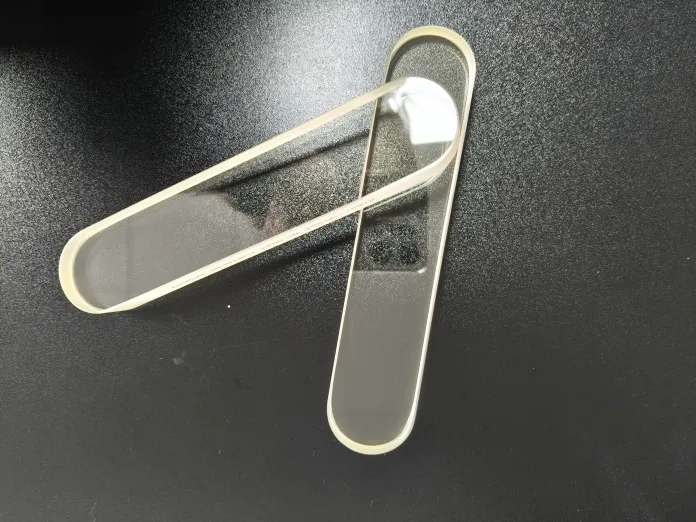
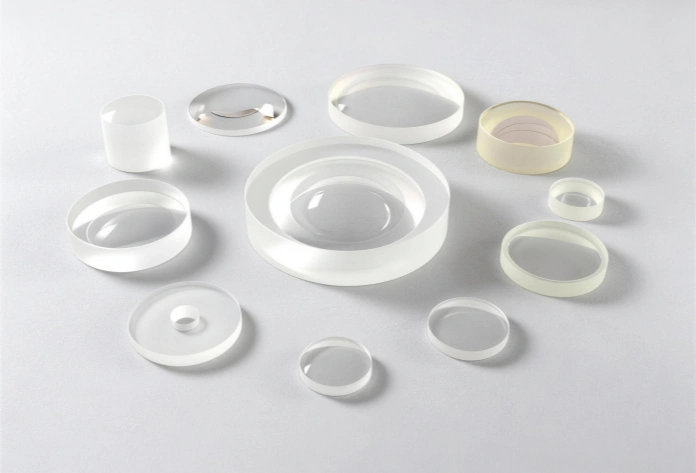
For chemical and petrochemical duty, tempered borosilicate glass to DIN 7080 is the standard choice, and for good reason. Borosilicate carries far fewer loosely-bound sodium ions than soda-lime glass, which gives it much higher hydrolytic and chemical resistance. In one referenced study, soda-lime glass degraded roughly ten times faster than borosilicate under alkaline attack, with the two grades already diverging sharply from 134 °C upward. In practice, that means a borosilicate window survives hot caustic and acid service that would cloud a soda-lime window in months.
Borosilicate also brings a low thermal expansion coefficient, so it tolerates the thermal shock of steam-out and emergency cooling. For these reasons, borosilicate to DIN 7080 is our default window for the LMX 880-XR sight flow indicator and most chemical-service sight glasses.
When soda-lime is acceptable — and when it is not
Soda-lime glass to DIN 8902 costs less and works well for benign, lower-temperature utility service such as water and general fluids up to about 150 °C. However, it should never go into hot alkaline, acidic or solvent-bearing streams, nor into service with sharp thermal cycling. In short, soda-lime is a budget option for mild duty only; for anything aggressive, borosilicate is the right call.
Protecting glass against strong caustic and fluorine
Some media defeat even borosilicate. Strong hot sodium hydroxide, concentrated alkaline solutions and fluorine-bearing streams attack all silicate glass. For these cases, the answer is a sacrificial shield: a thin mica or PTFE film placed over the wetted glass face takes the chemical attack and is replaced periodically, while the structural glass behind it stays intact. This extends service intervals dramatically in the most aggressive caustic duty.
| Service condition | Recommended glass | Why |
|---|---|---|
| Acids, solvents, general chemical, thermal cycling | Tempered borosilicate (DIN 7080) | High chemical durability & low thermal expansion |
| Mild water / utility, ≤ 150 °C, low cycling | Tempered soda-lime (DIN 8902) | Lower cost; adequate for benign duty |
| Strong hot caustic, concentrated alkali, fluorine | Borosilicate + mica / PTFE shield | Sacrificial film absorbs chemical attack |
Solution 2 — Matching the body alloy to corrosion risk
The body is the pressure-retaining part, so its corrosion resistance directly sets the safety margin of the whole unit. Here the decision hinges on chloride level and temperature. Many failures trace back to one avoidable mistake: defaulting to 316 stainless steel in service that has outgrown it.
316 / 316L — the workhorse, within limits
316 and 316L stainless (ASTM A351 CF8M cast, A182 F316 forged) remain the right default for most chemical and pharmaceutical service. The molybdenum content gives good general corrosion resistance, and 316L resists sensitisation during welding. However, engineers must respect its ceiling: in chloride service above roughly 50–60 °C, 316 becomes prone to stress corrosion cracking. Below that, and away from concentrated chlorides, it performs reliably for years.
Duplex 2205 — the offshore chloride answer
When chlorides and warmth combine, duplex 2205 (ASTM A182 F51 / A995 4A) is the engineered solution. Its two-phase ferrite-austenite structure resists chloride stress corrosion cracking up to about 150 °C — far beyond 316’s limit — and its PREN of roughly 35 gives much stronger pitting resistance. It also offers roughly double the yield strength of 316. That combination is exactly why NORSOK M-630 specifies 2205 as a default material for North Sea offshore piping, and why we recommend it for FPSO topside and seawater-adjacent sight glass bodies. One caveat: 2205 is prone to embrittlement above 300 °C, so it is not used for high-temperature duty.
Super duplex, alloys and carbon steel
For the most aggressive chloride immersion — seawater injection, desalination — super duplex 2507 (PREN around 43) pushes resistance close to seawater-immune. For specific chemistries, nickel alloys such as Hastelloy, or titanium, handle media that defeat stainless entirely. At the other end, coated carbon steel (A216 WCB / A105) remains cost-effective for general hydrocarbon and utility service where corrosion is not the driver. Because our sight flow indicators accept all of these body materials to order, the same design platform scales from a simple utility line to a super-duplex FPSO application.
| Material | PREN (approx.) | Chloride SCC limit | Best fit |
|---|---|---|---|
| Carbon steel (A216 WCB) | — | n/a (coated) | General hydrocarbon & utility |
| 316 / 316L SS | ~24 | ~50–60 °C in chlorides | Chemical & pharmaceutical (default) |
| Duplex 2205 | ~35 | ~150 °C | Offshore / chloride-bearing (≤ 300 °C) |
| Super duplex 2507 | ~43 | Near seawater-immune | Seawater injection, desalination |
| Hastelloy / titanium | — | Media-specific | Chemistries that defeat stainless |
Solution 3 — Sealing that survives the media and temperature
The seal is often the quietest limit in the assembly, and therefore the one most often overlooked. A body and glass rated to 300 °C mean nothing if the gasket lets go at 180 °C. The seal must match both the chemistry and the temperature ceiling of the service.
By default, PTFE is our standard gasket for its broad chemical compatibility, suitable to about 177 °C. For higher-temperature duty, armoured graphite extends the ceiling to roughly 450 °C. For specific aggressive or hygienic chemistries, we select FKM and FFKM elastomers by compound. The rule is straightforward: identify the lowest-rated element among flange, glass and seal, and treat that as the true limit of the assembly. In practice, the seal is frequently that governing element, so it deserves deliberate selection rather than a default.
Solution 4 — External coating for offshore survival
Importantly, corrosion attacks from the outside as well as the inside. On an offshore topside, salt spray degrades an unprotected flange and bolting, and once the coating fails, under-film corrosion forces the joint apart. A specified multi-coat system is therefore essential for marine service.
Our reference offshore system (uninsulated) follows a proven layered build: near-white blast preparation to SSPC-SP10, a zinc-rich epoxy primer, two high-build epoxy MIO intermediate coats, and a polyurethane finish, for a total dry film thickness of roughly 375–475 µm. Zinc-rich priming gives sacrificial galvanic protection, the epoxy MIO layers provide a tough barrier, and the polyurethane finish resists UV and weathering. For insulated or splash-zone locations, we adjust the system accordingly and specify colour per project.
| Layer | Coating | DFT (µm) |
|---|---|---|
| Surface prep | SSPC-SP10 near-white blast (profile 50–85 µm) | — |
| Primer | Zinc-rich epoxy | 75–100 |
| Intermediate ×2 | High-build epoxy MIO | 125–150 each |
| Finish | Polyurethane | 50–75 |
| Total DFT | — | 375–475 |
Putting it together — a selection workflow
The four decisions are not independent in practice; they interact, and the safe design respects the weakest link. Consequently, a disciplined workflow prevents the common failures described above.
- Define the service. First, pin down the medium chemistry, chloride level, design pressure, design temperature and thermal-cycling pattern. These four numbers drive every material choice.
- Select the glass. Next, choose borosilicate for aggressive or cycling service, soda-lime only for mild utility, and add a mica/PTFE shield for strong caustic or fluorine.
- Select the body. Then match the alloy to chloride and temperature: 316 for benign chemical duty, duplex 2205 for warm chloride and offshore, super duplex or nickel alloys for the extremes.
- Select the seal. After that, pick PTFE, graphite or FKM/FFKM so the gasket ceiling is not the hidden limit.
- Specify the coating. Finally, apply a full offshore multi-coat system for marine and splash-zone locations, and confirm the finish colour.
- Confirm the weakest link. Verify that the assembly’s true rating equals the lowest of the flange, glass and seal limits — never assume the flange class alone governs.
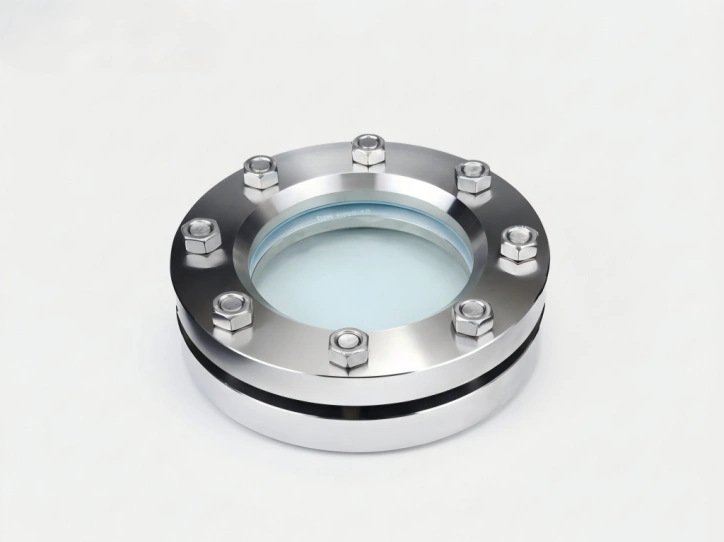
Because our extreme-service flanged sight flow indicator is configured per order across all four decisions, engineers can specify one part number and receive a unit matched exactly to the service — with EN 10204 3.1 certification, hydrostatic testing and, where required, PED 2014/68/EU approval for pressure duty.
Frequently asked questions
Material selection
When should I choose duplex 2205 instead of 316 stainless for a sight glass body?
Choose duplex 2205 when the service combines chlorides with warmth. 316 stainless (PREN ~24) becomes vulnerable to chloride stress corrosion cracking above roughly 50–60 °C, whereas duplex 2205 (PREN ~35) resists chloride SCC up to about 150 °C and offers roughly double the yield strength. That is why NORSOK M-630 specifies 2205 as a default for North Sea offshore piping. For the most aggressive seawater duty, step up to super duplex 2507; 2205 is not used above about 300 °C due to embrittlement.
Why is borosilicate glass preferred over soda-lime for chemical service?
Borosilicate glass (DIN 7080) has far higher chemical and hydrolytic durability than soda-lime because it carries fewer loosely-bound sodium ions. In referenced testing, soda-lime degraded about ten times faster than borosilicate under alkaline attack, with the two diverging sharply from 134 °C upward. Borosilicate also has lower thermal expansion, so it withstands thermal shock. Soda-lime (DIN 8902) is suitable only for mild, lower-temperature utility service.
Extreme media & conditions
How do you protect a sight glass against strong caustic or fluorine attack?
Strong hot caustic (sodium hydroxide), concentrated alkaline solutions and fluorine-bearing media attack all silicate glass, including borosilicate. The engineered answer is a sacrificial shield — a thin mica or PTFE film fitted over the wetted glass face. The film takes the chemical attack, and operators replace it periodically, while the structural glass behind it stays intact, extending service intervals in the most aggressive caustic duty.
What actually limits the temperature rating of a sight glass assembly?
The assembly’s true limit is the lowest of three values: the flange pressure-temperature rating (by material and temperature per ASME B16.5), the glass limit (borosilicate to about 280 °C), and the seal limit (PTFE to about 177 °C, armoured graphite to about 450 °C). Often the seal is the governing element. Never assume the flange class alone sets the limit — always design to the weakest link.
Coating & offshore
What external coating system suits offshore sight glasses?
A proven uninsulated offshore system uses SSPC-SP10 near-white blast preparation, a zinc-rich epoxy primer (75–100 µm), two high-build epoxy MIO intermediate coats (125–150 µm each) and a polyurethane finish (50–75 µm), for a total dry film thickness of about 375–475 µm. The zinc primer gives sacrificial protection, the epoxy MIO forms a tough barrier, and the polyurethane resists UV and weathering. We adjust the system and colour per project.
Can one sight flow indicator design cover all these different services?
Yes. The Lumiglas LMX 880-XR flanged sight flow indicator is configured per order across all four material decisions — glass, body, seal and coating — so a single design platform scales from a simple utility line to a super-duplex FPSO application. Each unit ships with EN 10204 3.1 certification and hydrostatic testing, and PED 2014/68/EU approval where the pressure duty requires it.
Specify the right sight flow indicator for your service
Tell us your medium, chloride level, design pressure and temperature, and our engineering team will match the glass, body, seal and coating for you.