
Infrared Crystals – Zinc Selenide Glass
Infrared Crystals — Zinc Selenide (ZnSe) Optical Windows & Discs
High-transmission zinc selenide discs and windows for infrared optics and CO₂ laser systems — outstanding mid- to long-wave IR throughput, very low absorption at 10.6 µm, good thermal shock resistance and suitability for high-power laser beam delivery and thermal imaging.
Description
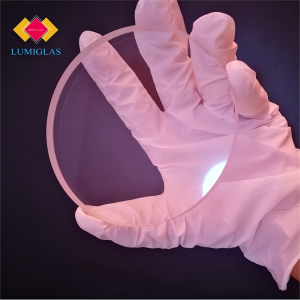
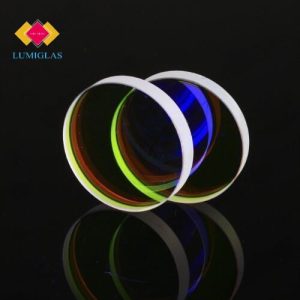
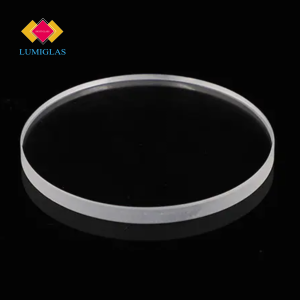
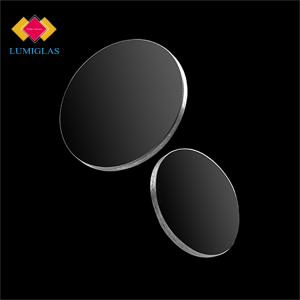
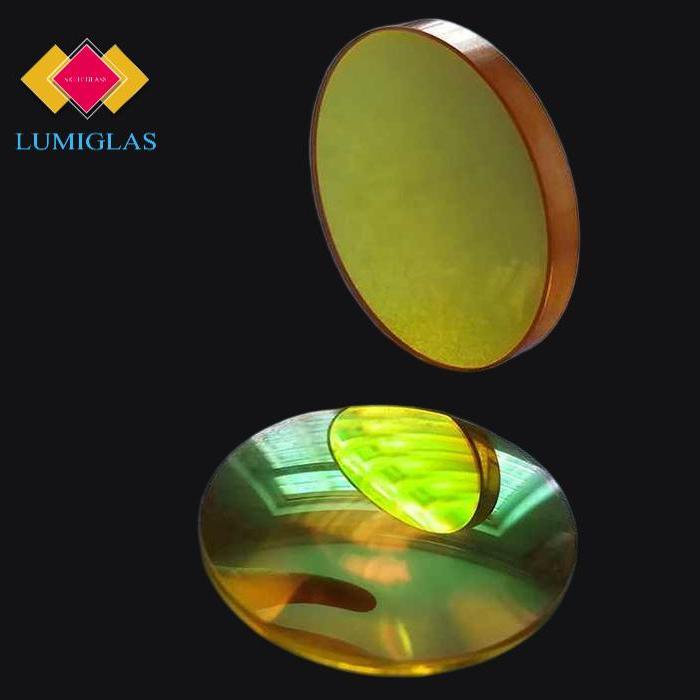
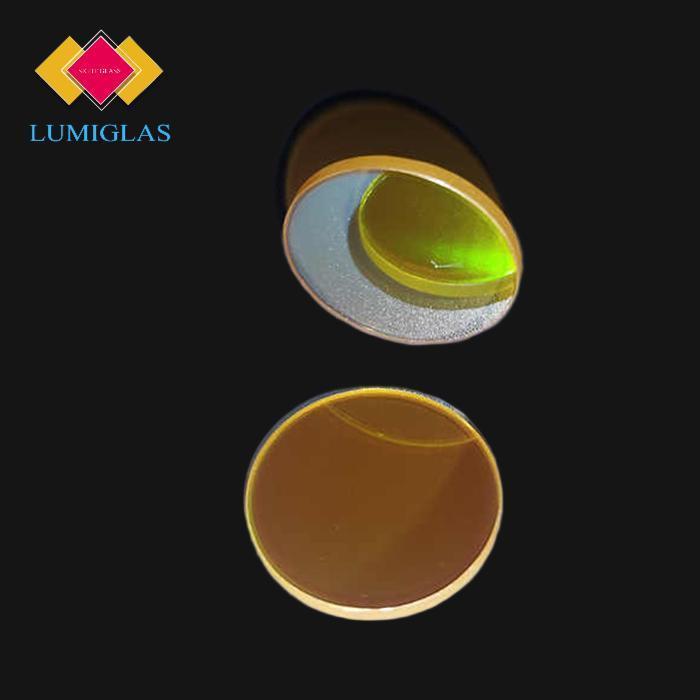
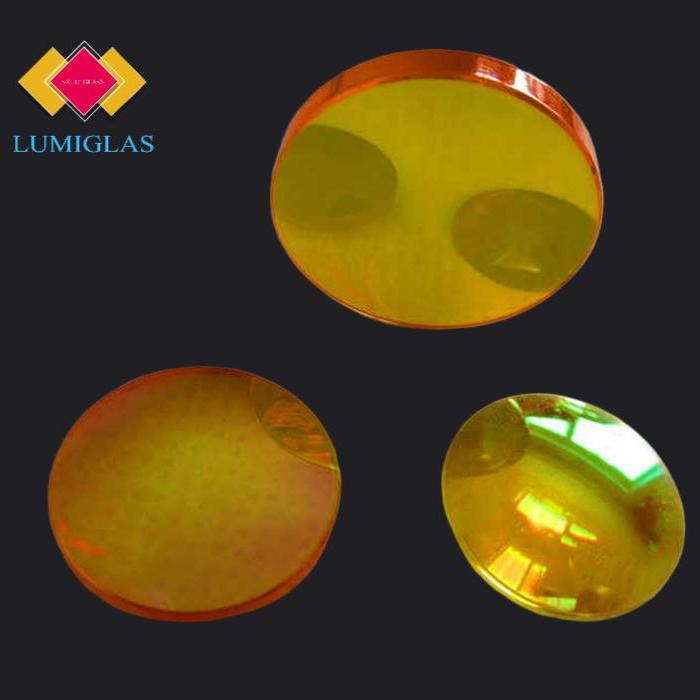
CVD zinc selenide (ZnSe-CVD) has stable physical and chemicalproperties, a wide spectral transmission range, high transmittance, low absorption of infrared wavelengths, and can transmit visible light, which is used to make visible long-wave infrared lenses, windows, output coupling mirrors and beam expanders.
Key benefits
-
Wide IR transmission — excellent throughput from roughly 0.5–0.6 µm up to ~20 µm (material and coating dependent), making ZnSe ideal for CO₂ laser optics (10.6 µm) and thermal imaging.
-
High CO₂-laser suitability — low absorption coefficient at 10.6 µm and good resistance to thermal shock under high average power.
-
Low bulk absorption / low scatter — enables high laser damage thresholds and high throughput in IR beam delivery.
-
Available finished options — DSP/SSP, plano, wedged, AR-coated, custom edgework, bevels, and laser-damage testing on request.
Why choose ZnSe for infrared windows & laser optics
ZnSe combines a uniquely broad IR passband with low intrinsic absorption at CO₂ wavelengths, enabling efficient beam delivery and minimal heating in high-power laser systems. Its optical and thermal properties make it a standard choice for CO₂ laser windows, thermal cameras, spectroscopic ATR prisms and many OEM IR assemblies where throughput and thermal performance matter.
Typical technical specifications
| Optical properties: bulk absorption coefficient @ 10.6 μm | 0.0005/cm |
|---|---|
| Refractive index temperature change @ 10.6 μm | 61×10-6/°C |
| Refractive index inhomogeneity @ 632.8nm | <6×10⁻⁶ |
| Melting point (°C) | 1520 |
| Density (g/cm3) | 5.27g/mm3 |
| Knoop hardness kg/mm3 | 112 |
| Young’s modulus GPa | 67.2 |
| Modulus of fracture MPa | 55.2 |
| Transmission range μm | 0.5~20 |
Applications & industries
-
CO₂ laser optics and beam delivery, thermal imaging and FLIR optics, IR spectroscopy and FTIR windows, medical/industrial laser windows, OEM thermal sensors, spectroscopic ATR prisms, and IR metrology systems
Downloads
Zinc Selenide Glass— Datasheet (PDF):zinc selenide glass
FAQ
1.What is ZnSe and what makes it suitable for infrared optics?
ZnSe (zinc selenide) is an infrared optical material with very wide transmission in the mid- to long-wave IR. It has low bulk absorption at common CO₂ laser wavelengths (10.6 µm), transmits some visible light for alignment, and offers good thermal performance for laser windows, lenses and thermal-imaging optics.
2.How should ZnSe optics be handled and cleaned?
Handle with clean gloves or finger-cots to prevent oils and scratches. Clean gently using lens tissue or lint-free wipes and an approved solvent (e.g., high-purity isopropyl alcohol or methanol) applied to the wipe — do not rub aggressively. Avoid abrasive cleaners and rough cloths; ZnSe is softer than typical optical glass and can scratch.
3.Can ZnSe be used in vacuum or cryogenic systems?
Yes — uncoated ZnSe is compatible with vacuum systems in many applications. If vacuum- or cryogenic-rated performance is required, specify the intended environment (pressure, temperature) so we can recommend suitable coatings and mounting methods.