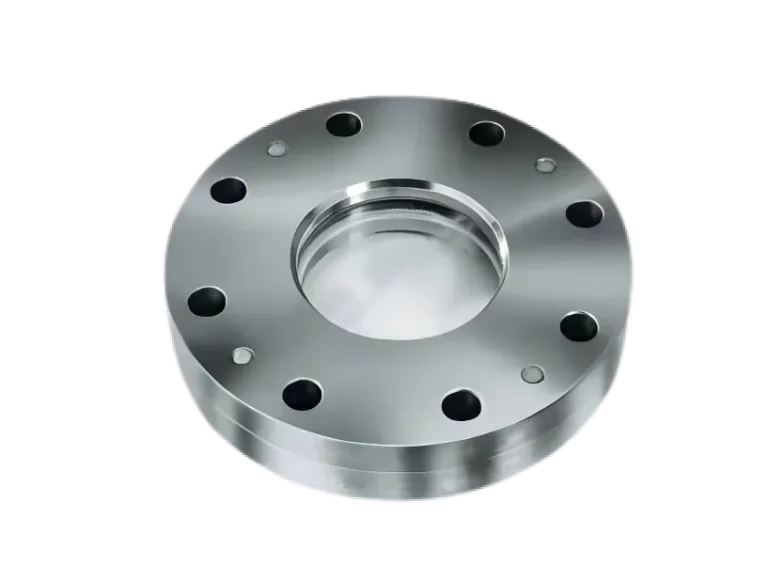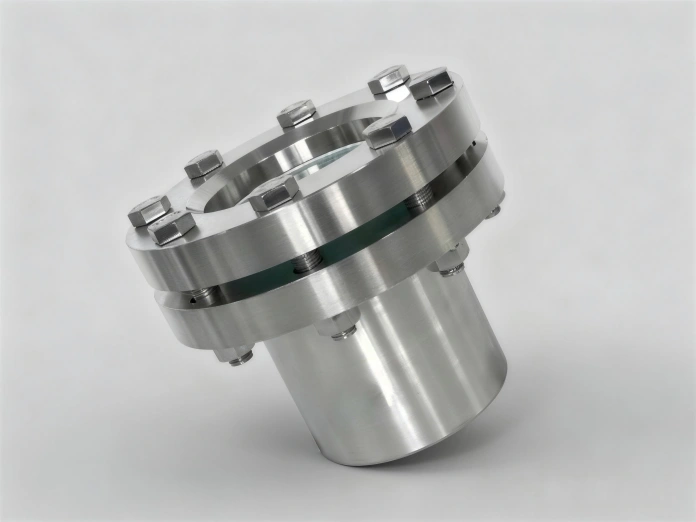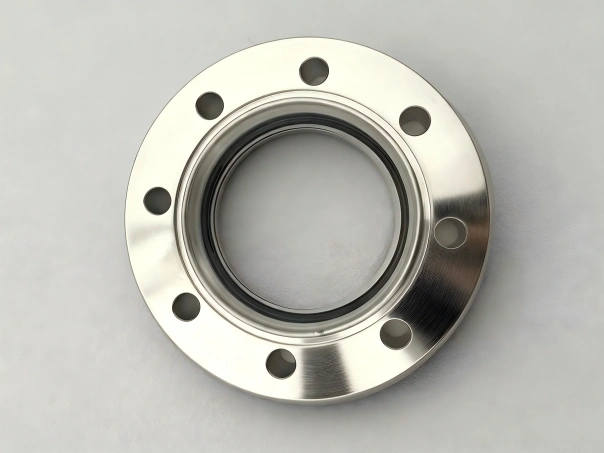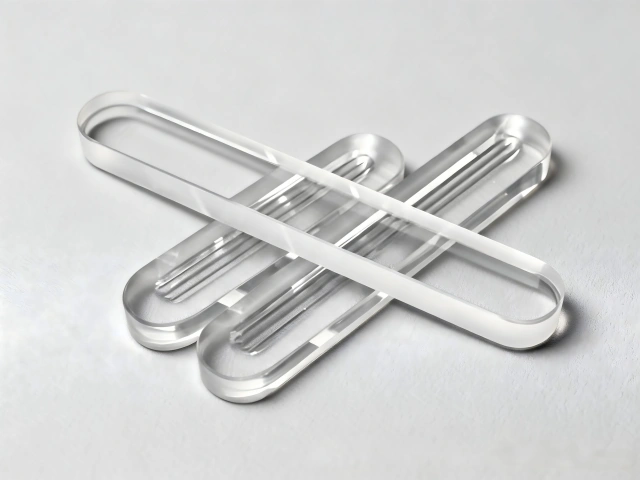

Why the choice of a flow sight glass manufacturer matters
A flow sight glass is often a safety-critical component: it must withstand pressure, temperature, and chemical exposure while remaining optically clear for inspection. A manufacturer’s materials, sealing technology, quality control and documentation determine whether a sight glass performs for months — or fails prematurely.
Materials & when to use them
Material selection is the first filter when comparing any flow sight glass manufacturer. Common materials and why they matter:
| Material | Strengths | Typical uses |
|---|---|---|
| Borosilicate Glass | Cost-effective; good thermal-shock resistance; broadly available | General process observation, boiler sight ports, low-to-medium temperature lines |
| Fused silica (JGS1) | Ultra-low coefficient of thermal expansion; excellent UV transmission; high bake capability | Laser inspection, UV-sensitive fluids, vacuum & high-temperature cyclic service |
| Sapphire glass (Al₂O₃) | Exceptional hardness; outstanding abrasion & chemical resistance; wide spectral transmission | Abrasive or corrosive services, high-wear optics, wide-spectrum optical windows |
| Note: | ||
Sealing methods and their impact
The sealing method affects leak performance, bake capability and maintenance:
- O-ring (elastomer) seals — low cost and easy service but limited bake temperature and potential outgassing.
- Metal gasket / CF flanges — excellent for high vacuum and bake-out; gaskets often single-use on disassembly.
- Vacuum brazed / fused joints — metallurgical bonds with lowest outgassing and best long-term stability; more costly but superior for demanding services.
Quality & testing you must require from any flow sight glass manufacturer
When evaluating suppliers, insist on the following documentation and tests:
- Material certificates (traceable batch numbers).
- Dimensional drawings and tolerance statements.
- Helium leak test reports or equivalent leak-rate measurements (e.g., Pa·m³/s).
- Bake-out temperature rating and outgassing guidance.
- Optical specs where relevant (flatness, scratch-dig, AR coatings).
- Photographic pre-shipment inspection and packing records for critical orders.
How to vet a flow sight glass manufacturer — practical checks
- Website & datasheets — do they publish material grades, max working temp, and leak figures?
- Ask for certificates — MTR, helium leak reports, and inspection photos for your part.
- Production capability — do they perform brazing, AR coating, and optical finishing in-house or through qualified partners?
- References & installations — ask for examples in similar industries (food, chemical, power).
- Stock & lead time — does the manufacturer keep common sizes in inventory or can they deliver quickly from nearby ports?
RFQ checklist for procurement (copy & paste)
Part: flow sight glass — visible diameter / plate thickness / flange type (e.g., DIN, ANSI, CF)
Material: borosilicate / fused silica (JGS1) / sapphire (Al2O3)
Sealing: O-ring (specify elastomer) / CF (copper gasket) / vacuum-brazed
Service conditions: max temp (°C), pressure (bar), media (chemicals), thermal cycles
Tests & documents: material certificate, dimensional drawing, helium leak test report, pre-shipment photos
Optical: AR coating, flatness (λ/x), scratch-dig if required
Packaging: clean/ nitrogen purge / desiccant
Lead time, EXW/FOB price, shipment port and spare policy
Tip: include acceptance criteria in the PO — e.g., maximum allowed leak rate and required certificate formats.
Why consider Lumiglas as your flow sight glass manufacturer
Lumiglas manufactures flow sight glasses with engineering-grade controls and documentation. Key advantages we provide:
- Vacuum brazing and fused-seal capability for low outgassing and high bake-out.
- Stocked common sizes in fused silica, sapphire and borosilicate for fast dispatch from nearby export hubs.
- Helium leak testing, material certificates and pre-shipment photos included on request.
- Custom optical finishing and AR coatings for imaging and laser applications.
If you want a free spec review, send flange photos and operating conditions to lumistar@188.com. We’ll recommend the right material and sealing strategy and provide a port-optimized shipping plan.
FAQ — quick answers
- Q: What is a flow sight glass manufacturer?
A: A company that designs, fabricates and certifies sight glasses used to visually inspect flow and process media in pipes, vessels and sight ports. - Q: Which sealing method is best for high-temperature steam lines?
A: Vacuum-brazed or metal-gasket (CF) solutions are preferred because elastomer O-rings typically cannot withstand sustained high bake temperatures. - Q: How important is helium leak testing?
A: For critical or vacuum-related applications, helium leak testing provides a quantitative measurement of seal integrity and is essential for traceability and audits.