Which companies manufacture DIN7081 sight glass?
When engineers and procurement teams ask “Which companies manufacture DIN7081 sight glass?” they usually want two things: reliable parts that fit their level-gauge seats, and clear documentation (material certificates, tolerances, P–T ratings). In practice, DIN7081 sight glass plates are produced by three broad supplier types — and the right choice depends on your lead time, quality needs and traceability requirements. This article explains who makes DIN7081 plates, how vendors differ, and how to select a supplier (with a practical checklist). At the end we explain why Lumiglas can be a direct, traceable source for standard and custom DIN7081 sight glasses.
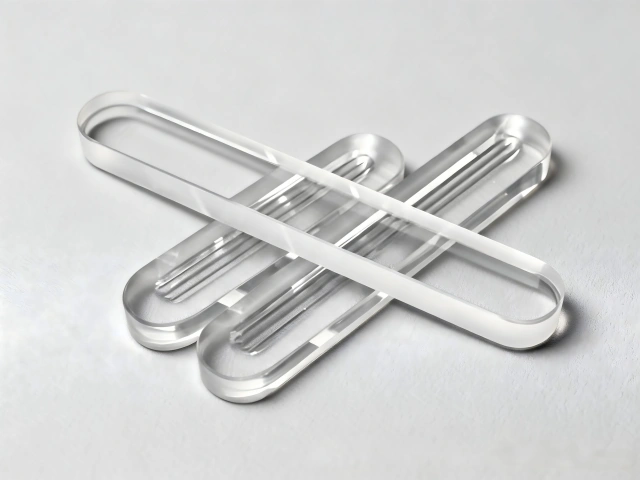
Who manufactures DIN7081 sight glass?
Rather than an endless vendor list, think in categories — each category serves different project needs:
-
Specialist glassmakers and optical glass producers
-
These firms manufacture borosilicate and other technical glass in controlled batches. They can supply DIN7081 plates with documented material grades and batch traceability. Ideal when you need certified glass (e.g., for pressure-bearing or audited systems).
-
-
Level-gauge OEMs and mechanical fabricators
-
Companies that make level gauges often cut, edge-finish and stock DIN7081 plates as part of an assembly. Their advantage: matched gaskets/clamps and an easy retrofit path for specific gauge models.
-
-
Distributors and trading houses
-
These suppliers source plates from multiple factories. They can be fast and cost-effective for common sizes, but quality and certificates vary — buyer diligence is essential.
-
-
Regional industrial stockists
-
Local suppliers focus on keeping common DIN7081 sizes in stock for quick replacement. Good for minimizing downtime.
-
Each category has merits: glassmakers excel in traceability; OEMs in compatibility; distributors in availability; stockists in speed.
What differentiates manufacturers
When evaluating companies that manufacture or supply din7081 sight glass, compare across these dimensions:
-
Material control & certificates — does the supplier provide material grade (e.g., borosilicate 3.3), batch numbers and mill test reports?
-
Dimensional accuracy & tolerances — can they supply the declared tolerances and flatness/parallelism data?
-
Pressure/temperature (P–T) data — are rated service curves provided for the chosen thickness and size?
-
Stock vs made-to-order — is the size stocked (fast delivery) or custom-cut (longer lead time)?
-
Edge finishing & sealing guidance — do they offer lapped faces, chamfers, and recommended gaskets/clamps?
-
After-sales and spare parts — are spare plates, lenses or seals readily available?
-
Quality systems — ISO manufacturing, traceable QA records, and inspection photos on request.
Always request the supplier’s technical datasheet and a dimensional report for critical or pressure-containing applications.
Representative supplier expectations
| Supplier type | Typical strength | Best when… |
|---|---|---|
| Specialist glassmaker | Strong material traceability; lab test data; custom glass grades | You need certificates (e.g. EN10204) and precise pressure–temperature ratings or custom optics |
| Level-gauge OEM | Matched gaskets/clamps; assembly compatibility; spare part alignment | Replacing or servicing specific gauge models where fit/interchangeability matters |
| Distributor / Trading house | Competitive price; faster quotations; broad SKU range | You need common sizes quickly and cost sensitivity outweighs heavy documentation |
| Regional stockist | Very short lead times; local pickup and emergency availability | Emergency replacements, site spares, or urgent onsite repairs |
Practical procurement checklist — what to ask every manufacturer
Before you place an order for a din7081 sight glass, use this checklist when contacting suppliers:
-
Exact dimensions: length × width × thickness and nominal code (if they use SKU codes).
-
Manufacturing tolerances: length, width, thickness and flatness.
-
Material grade: borosilicate specification (or alternative glass type) and batch number.
-
P–T rating data: operating pressure/temperature curves for the selected size and thickness.
-
Surface finish: lapping, edge treatment and whether faces are polished for sealing.
-
Gasket/clamp compatibility: specify seat geometry or ask for gasket recommendations.
-
Stock vs lead time: is the item stocked? Typical lead time? Shipping options.
-
Inspection & certificates: can they provide photos and certificates before shipment?
-
Spare policy: availability of spare plates and lead times for reorders.
Request written confirmation on all the above — it prevents costly mismatches in the field.
Why consider Lumistar as your supplier?
At the stage where “who manufactures DIN7081 sight glass?” becomes a procurement decision, many customers prefer a partner who can combine traceable material, engineering advice, and global supply. Lumistar offers:
-
Standard stock and custom cutting of DIN7081 plate sizes for common widths (30 / 34 mm) and typical thicknesses (e.g., 17 mm).
-
Material traceability and batch certificates for borosilicate plates on request — useful for QA and audit records.
-
Technical support: assistance measuring seats, confirming gasket compatibility, and reviewing P–T suitability for your application.
-
Fast replacement service: we maintain common sizes in inventory and can advise on spare stocking strategies to minimize downtime.
If you’d like us to review your seat dimensions and recommend the correct DIN7081 code or a custom solution, send seat photos and measurements to lumistar@188.com or upload them via our technical request page: DIN7081 Sight Glass. We’ll reply with a specification checklist and suggested part numbers.