
LUMIGLAS® Type 73 Fused Sight Glass — Metal-Fused Borosilicate Disc to DIN 7079
73-Type sintered sight glass — sintered borosilicate sight window for splash-free visual inspection. Custom sizes, flanged housings & COA available.
Description
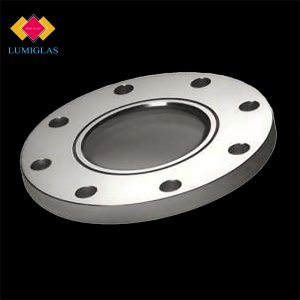
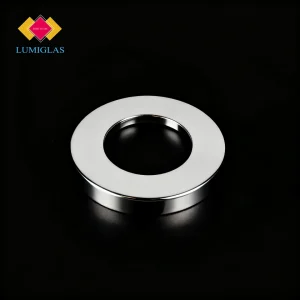
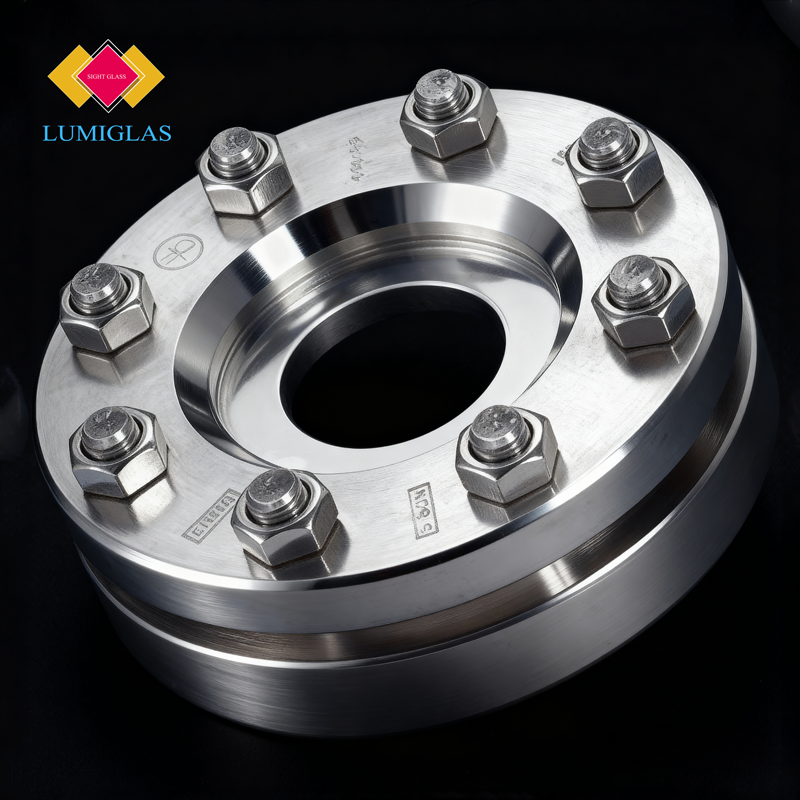
Specifically, Lumiglas manufactures the Type 73 fused sight glass as a metal-fused borosilicate observation disc in strict conformance with DIN 7079 and DIN 7080. During production, our manufacturing process heats the borosilicate glass insert and the metal ring together until the glass flows against the ring surface. Next, the assembly undergoes controlled precision cooling. Consequently, this creates a mechanically prestressed unit which holds the glass insert in permanent compression. Ultimately, this glass-fused-to-metal construction gives the Type 73 its defining safety advantage over conventional thermally toughened sight glass discs, because it effectively eliminates the possibility of sudden, catastrophic rupture.
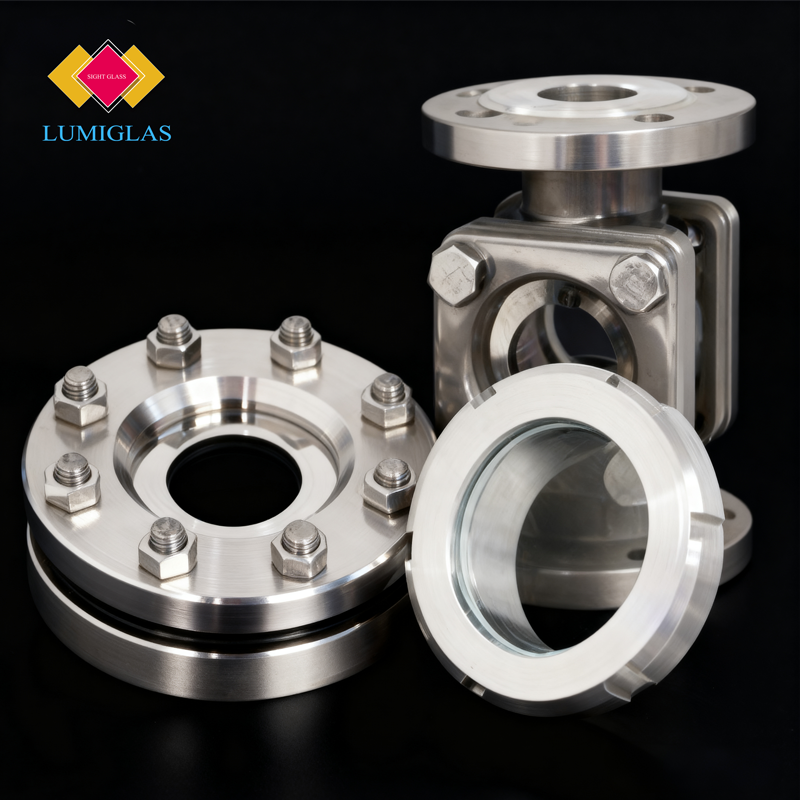
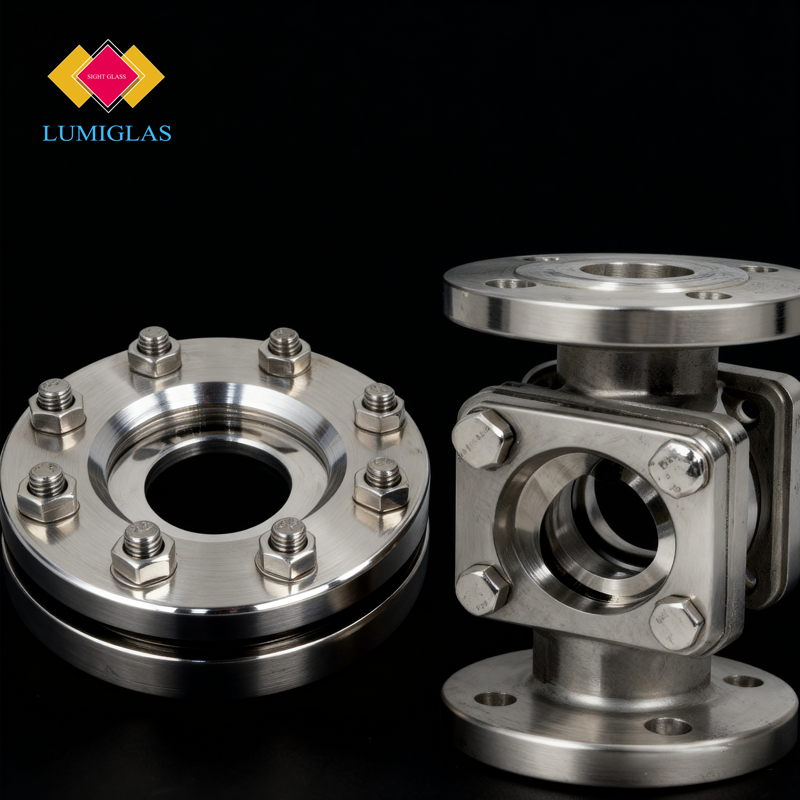
Furthermore, as a direct replacement for conventional glass discs, the LUMIGLAS® Type 73 fused sight glass fits standard DIN 28120 and DIN 28121 circular sight port housings, DIN 11851 screwed sight glass fittings, and a wide range of sight flow indicator assemblies. Importantly, you can install these drop-in replacements without requiring any housing modification.
📋 Installation & Maintenance Manual (PDF)
📐 Selection Guide — Ring Material & Assembly Reference (PDF)
Technical Specifications — LUMIGLAS® Type 73 Fused Sight Glass
| Parameter | Value / Standard |
|---|---|
| Product Type | Type 73 Fused (Metal-Fused / Sintered) Sight Glass Disc |
| Glass Material | Borosilicate glass, fused to metal ring per DIN 7079 |
| Base Glass Standard | Borosilicate glass per DIN 7080 |
| Operating Temperature | −60°C to +300°C (ring material dependent) |
| Operating Pressure | Up to 64 bar · We offer higher pressures on request |
| Compatible Assemblies | DIN 28120 · DIN 28121 · DIN 11851 · Sight flow indicators |
| Ring Materials | Carbon Steel (1.0570) · Duplex SS (1.4462) · Hastelloy C-22 (2.4602) · Hastelloy C-4 (2.4610) · Hastelloy C-276 (2.4819) |
| Pressure Equipment Directive | PED 2014/68/EU, Module H/H1 (DIN/EN/ISO 9001) |
| AD Standards | AD-Merkblatt W0/TRD 100 |
| Material Certificates | We supply EN 10204-3.1 or 3.2 Certificate of Conformity as standard |
Ring Materials & Operating Temperature
Generally, the metal ring acts as the primary pressure-bearing component of the fused sight glass assembly. Therefore, you must select the appropriate alloy based on your operating temperature range and process medium chemistry.
| Ring Material | Min. Temp. | Max. Temp. | Typical Application |
|---|---|---|---|
| Carbon Steel (1.0570) | −10°C | +300°C | General industrial, pressure vessels, boilers |
| Duplex Stainless Steel (1.4462) | −30°C | +280°C | Corrosive media, offshore, chemical processing |
| Hastelloy C-22 (2.4602) | −60°C | +300°C | Aggressive acids, oxidising media, pharmaceutical |
| Hastelloy C-4 (2.4610) | −60°C | +300°C | High-temperature corrosive service (d1 ≤150 mm) |
| Hastelloy C-276 (2.4819) | −60°C | +300°C | Severe halogenated / chloride-rich environments |
Standard Dimensions & Pressure Ratings — DIN 28120 Compatible
d1 = outer diameter · d2 = inner (viewing) diameter · S = required glass thickness (mm) at rated pressure
| d1 (mm) | d2 (mm) | 10 bar — S | 16 bar — S | 25 bar — S | 40 bar — S | 64 bar — S |
|---|---|---|---|---|---|---|
| 45 | 25 | 10 | 10 | 10 | 10 | 15 |
| 60 | 35 | 10 | 10 | 12 | 15 | 18 |
| 63 | 35 | 10 | 10 | 12 | 15 | 20 |
| 80 | 45 | 10 | 12 | 15 | 20 | 22 |
| 100 | 55 | 12 | 15 | 20 | 25 | 28 |
| 125 | 65 | 15 | 20 | 25 | 25 | 30 |
| 150 | 70 | 20 | 25 | 30 | 30 | 32 |
| 175 | 80 | 20 | 25 | 30 | 30 | 35 |
| 200 | 100 | 25 | 30 | 30 | 35 | 40 |
| 250 | 120 | 30 | 30 | 35 | 40 | — |
Note: We provide non-standard dimensions and higher pressure ratings on request. Please provide d1, d2, operating pressure and ring material when enquiring.
Why Specify a Fused Sight Glass Over a Conventional Glass Disc?
Generally, conventional thermally toughened sight glass discs can fail suddenly and without warning under pressure surges, thermal cycling or mechanical impact. In contrast, the metal-fused construction of the Type 73 completely eliminates this failure mode. Specifically, the compressive prestress on the glass insert ensures that any surface damage remains localised and does not propagate to catastrophic fracture. Indeed, this resilient property remains unique to glass-fused-to-metal sight glasses which we manufacture per DIN 7079.
No Sudden Rupture Risk
The design effectively eliminates the possibility of sudden, unexpected rupture — which remains the primary failure mode of conventional sight glass discs.
Over-Tightening Tolerant
High resistance to bending and over-tightening offers simple, fast installation with zero risk of breakage during fitting.
Reusable
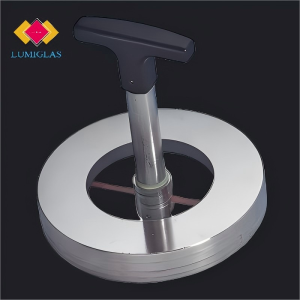
Unlike conventional glass discs, maintenance staff can safely remove, clean and refit the Type 73 fused sight glass in the same or a different compatible assembly.
Extreme Resistance
Extreme resistance to impact, pressure and temperature ensures wide acceptance across European and American chemical industries.
Compatible Assemblies & Typical Applications
Therefore, engineers specify the LUMIGLAS® Type 73 as a direct replacement for conventional glass discs in the following standardised housing types. Importantly, these drop-in replacements require absolutely no housing modification for DIN 28120, DIN 28121 or DIN 11851 assemblies.
- ▸First, DIN 28120 circular sight ports — acts as a direct replacement fused sight glass disc for flanged pressure vessel and reactor viewports.
- ▸Second, DIN 28121 circular sight ports — serves as an alternative flanged sight glass fitting standard which remains fully compatible with Type 73 dimensions.
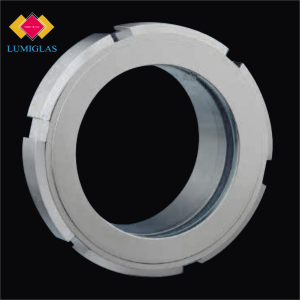
- ▸Third, DIN 11851 screwed sight glasses — provides a hygienic threaded connection which is standard in food, dairy, beverage and pharmaceutical processing.
- ▸Next, Sight flow indicators — guarantees inline pipeline flow observation by replacing the conventional disc in flanged or cartridge sight flow indicator bodies.
- ▸Finally, Level gauges in foaming or turbulent media — the fused glass surface noticeably reduces splash and stabilises the liquid profile at the observation window, thus enabling reliable level reading where conventional glass would be obscured.
Technical Documents & Downloads
📄 Technical Datasheet
Full specifications, dimensional table, ring material reference and approvals — DIN 7079 / DIN 28120.
📋 Installation & Maintenance Manual
Installation procedure, damage factor analysis, inspection schedule and replacement instructions per DIN 7079.
📐 Selection Guide
6-step selection process, ring material chemical compatibility matrix, pressure/temperature envelope and assembly reference.
Frequently Asked Questions
Request a Quote — LUMIGLAS® Type 73 Fused Sight Glass
All dimensions · All ring materials · DIN 28120 / DIN 28121 / DIN 11851 / Sight flow indicators · EN 10204-3.1 cert · OEM & project volumes