81-Type Sintered Sight Glass for DIN 11851 Fittings — Hygienic Borosilicate Fused-to-Metal Design
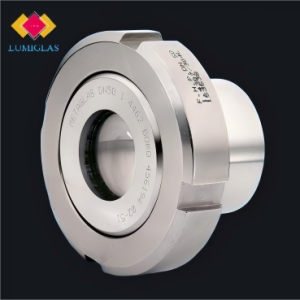
Lumiglas® 81-Type sintered sight glass for DIN 11851 hygienic fittings.
Fused-to-metal borosilicate, CIP/SIP rated to 300°C, DN32–DN125, 40 bar.
METAGLAS® Type 81 compatible. EN 10204-3.1. Request quote →
Description
✓ PED 2014/68/EU Compliant
✓ CIP / SIP Compatible
🏭 ISO 9001:2015 Bureau Veritas
🔥 100% Inspected
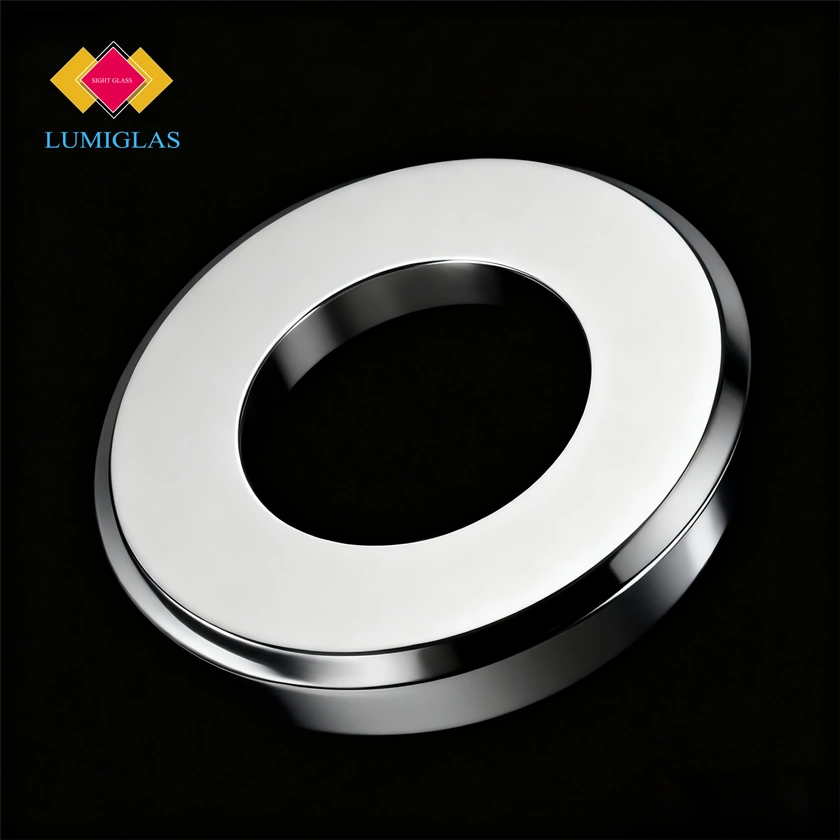
The Lumiglas® 81-Type Sintered Sight Glass is a safety-grade hygienic sight glass for screwed process fittings conforming to DIN 11851 (EN 10357, dairy thread standard). Indeed, the borosilicate glass disc is permanently fused — sintered — into a precision-machined metallic ring. Consequently, this creates a hermetic fused-to-metal seal that eliminates the gasket degradation and contamination risks inherent in conventional loose-disc designs.
Furthermore, this DIN 11851 sight glass is the direct Lumiglas® equivalent of METAGLAS® Type 81 and other sintered sight glass disc designs for dairy-thread screwed fittings. Specifically, it fits directly into existing DIN 11851 fittings across DN32 to DN125 without modification, making it a drop-in replacement for pharmaceutical, food processing, and fine-chemical vessel installations worldwide.
Rated to 40 bar (DN32–40) and 300°C, it withstands the full CIP/SIP sterilisation cycle with no seal relaxation, no glass fragment contamination risk, and no loss of visual clarity over repeated thermal cycling. Therefore, it is the preferred choice wherever GMP compliance, zero contamination, and long-term seal integrity are mandatory.
Why Fused-to-Metal Construction Outperforms Conventional Hygienic Sight Glasses
Conventional DIN 11851 sight glass assemblies rely on compressive O-ring or gasket loading to seal the glass to the fitting. However, this approach has a fundamental weakness: under repeated CIP/SIP thermal cycling — typically 121°C steam sterilisation followed by cool water flush — the gasket material compresses, relaxes, and eventually loses sealing force. As a result, this leads to micro-gap formation and potential contamination of the process fluid.
Fortunately, the sintered fused-to-metal design eliminates this failure mode entirely. Since the borosilicate glass bonds permanently to the metallic ring during the sintering process, there is no gasket to relax, no seal to degrade, and no gap to form — regardless of how many sterilisation cycles the assembly undergoes.
| Design Factor | Conventional Loose-Disc (O-ring sealed) | Sintered Fused-to-Metal (81-Type) |
|---|---|---|
| Seal type | O-ring or gasket — degradable | Glass permanently fused to metal — no degradation |
| CIP/SIP cycles | Seal relaxes with repeated cycling → replacement needed | No seal change — hermetic integrity maintained indefinitely |
| Glass fracture risk | Fragments can enter process stream | Fragments retained in fused ring — fail-safe design |
| GMP compliance | Risk of contamination from degrading elastomers | Zero elastomer contact with process — fully GMP compliant |
| Maintenance | Periodic gasket inspection and replacement required | No scheduled seal maintenance |
Technical Specifications
| Parameter | Value / Standard |
|---|---|
| Fitting Standard | DIN 11851 / EN 10357 screwed hygienic fittings (dairy thread) |
| Construction Type | Borosilicate glass disc permanently sintered (fused) into metallic ring — no process-side gasket |
| Nominal Sizes | DN 32 · DN 40 · DN 50 · DN 65 · DN 80 · DN 90 · DN 100 · DN 125 |
| Max. Pressure | 40 bar (DN32–DN40) · 25 bar (DN50–DN65) · 16 bar (DN80–DN125) · Higher ratings on request |
| Operating Temperature | −60°C to +300°C depending on ring material selection |
| CIP / SIP Compatibility | Yes — compatible with clean-in-place and steam-in-place sterilisation to 134°C / 3 bar |
| Ring Material (Standard) | Duplex Stainless Steel 1.4462 — −30°C to +280°C |
| Ring Material (Options) | Hastelloy C-22 (2.4602) · Hastelloy C-4 (2.4610) · Other alloys on request |
| Sealing Principle | Hermetic atmospheric-side fused seal — no process-side elastomer or gasket required |
| Material Certificate | EN 10204-3.1 material certificate — supplied as standard |
| Pressure Equipment | PED 2014/68/EU · AD 2000 Rules |
| Factory QC | ISO 9001:2015 (Bureau Veritas) · 100% visual and dimensional inspection per batch |
All values at ambient temperature. Derate pressure for elevated temperature service per P-T curve. Higher pressure ratings and custom alloys available on request.
Dimensions & Pressure Ratings — DIN 11851 Series
All dimensions in mm. d1 = outer diameter · d2 = ring OD · d3 = viewing diameter · h = total height · g = glass thickness
| DN | d1 (mm) | d2 (mm) | d3 Viewing Ø (mm) | h (mm) | g Glass (mm) | Max. Pressure (bar) |
|---|---|---|---|---|---|---|
| 32 | 50 | 41 | 23 | 13 | 10 | 40 |
| 40 | 56 | 48 | 25 | 13 | 10 | 40 |
| 50 | 68.5 | 61 | 35 | 14 | 11 | 25 |
| 65 | 86 | 79 | 45 | 16 | 12 | 25 |
| 80 | 100 | 93 | 50 | 16 | 12 | 16 |
| 90 | 111 | 103 | 55 | 20 | 15 | 16 |
| 100 | 121 | 114 | 60 | 20 | 15 | 16 |
| 125 | 150 | 137 | 70 | 23 | 17 | 16 |
Ring Material Selection Guide
The ring material determines the chemical compatibility and temperature range of the complete hygienic sight glass assembly. Generally, for most pharmaceutical and food applications, Duplex 1.4462 is the standard choice. Conversely, for aggressive media or extreme temperature cycles, Hastelloy alloys provide the necessary corrosion resistance.
| Material | Grade | Temperature Range | Recommended Service |
|---|---|---|---|
| Duplex Stainless Steel | 1.4462 | −30°C to +280°C | Pharmaceutical, food, beverage, cosmetic — standard GMP applications |
| Hastelloy C-22 | 2.4602 | −60°C to +300°C | Aggressive oxidising acids, mixed acid systems, high-temperature CIP |
| Hastelloy C-4 | 2.4610 | −60°C to +300°C | High-purity chemical and fine chemical processes — superior intergranular corrosion resistance at elevated temperature |
Industry Applications
The 81-Type DIN 11851 sight glass is specified wherever a screwed hygienic fitting requires reliable visual observation under sterile process conditions. Specifically, the following industries and vessel types represent the primary application areas:
💊 Pharmaceutical & Biotech
GMP bioreactors, autoclaves, fermenters, WFI storage vessels. CIP/SIP compatible — sterile visual inspection without system breach. EN 10204-3.1 certs meet FDA and EMA documentation requirements.
🍺 Food & Beverage
Dairy, brewery, juice, syrup, and sugar processing lines. DIN 11851 dairy-thread connection — no dead zones, cavity-free design, easy inline CIP cleaning without disassembly.
🧴 Cosmetic & Personal Care
Emulsifiers, mixing vessels, reaction kettles. Hygienic design prevents product contamination from glass fragments or seal degradation throughout the production campaign.
🔬 Fine Chemical
Crystallisers, dryers, centrifuges, and reactors handling aggressive media at high temperature. Hastelloy ring options provide corrosion resistance where 316L stainless is insufficient.
⚗️ Process Vessels & Columns
Evaporators, distillation columns, separators, and stirred vessels. Direct screwed installation into DIN 11851 nozzles — no welded flange modification needed for retrofit.
What Is DIN 11851? The Dairy Thread Standard Explained
DIN 11851 (also known as EN 10357 in its updated form) is the German and European standard defining the dimensions and design requirements for screwed hygienic unions used in food, dairy, pharmaceutical, and biotechnology processing. Specifically, the connection uses a coarse round thread — informally called the “dairy thread” — with rounded thread edges specifically designed to eliminate crevices where bacteria could accumulate.
Since the DIN 11851 standard demands cavity-free, fully drainable connections, it requires the sight glass disc to sit flush with the vessel inner wall with no protruding edges. Consequently, the sintered fused-to-metal construction of the 81-Type satisfies this requirement — the glass disc surface is flush with the ring face, eliminating any crevice or lip that could harbour contamination.
Related Lumiglas® Sintered Sight Glass Types
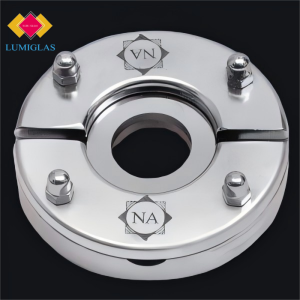
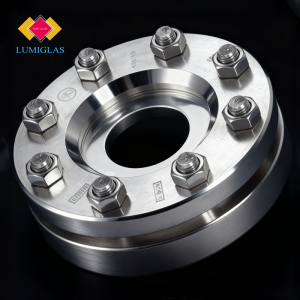
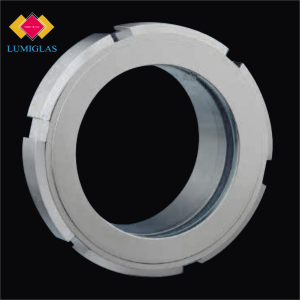
Lumiglas® manufactures a complete range of fused-to-metal sintered sight glass types for different vessel connection standards. Therefore, if the 81-Type DIN 11851 screwed design does not match your fitting configuration, the following alternatives cover the most common flanged and welded vessel standards:
| Type | Connection | Sizes | Best For |
|---|---|---|---|
| 81-Type (this product) | DIN 11851 screwed | DN32–DN125 | Pharma, food, biotech — existing DIN 11851 nozzles |
| 82-Type Sintered Sight Glass | DIN 28120 flanged weld-on | DN50–DN200 | Pressure vessels, reactors — weld-on flange connection |
| 73-Type Sintered Sight Glass | Flanged, bolted | DN50–DN150 | General industrial and chemical vessel applications |
| 73-SW Scraper Type | Flanged with wiper | DN50–DN150 | Viscous, coating, or crystallising media — self-cleaning glass surface |
Frequently Asked Questions
Need an 81-Type Sintered Sight Glass for Your DIN 11851 Fittings?
Send us your DN size, process media, and operating pressure/temperature.
Lumiglas® will confirm the correct ring material and provide a quote within 24 hours.